







What's Happening?
Michael Snyder, Director of the Center for Genomics and Personalized Medicine at Stanford University, is a strong proponent of using health-tracking wearables and AI to shift healthcare from a 'sickcare' model to a proactive 'healthcare' model. Snyder, who
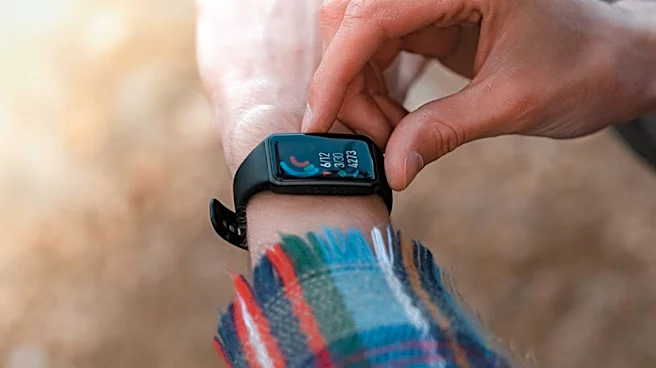
personally uses multiple wearables, believes these devices can provide continuous, longitudinal health data, enabling early detection of health shifts before symptoms appear. His research has shown that wearables can detect illnesses like Lyme disease and COVID-19 presymptomatically. He also highlights the potential of continuous glucose monitoring (CGM) to reveal glucose spikes in seemingly normal individuals, influencing dietary choices. Snyder is leading an ARPA-H project to develop an FDA-approved 'intrinsic capacity' score, a quantitative measure of health and wellness, and a home test for frequent, affordable health monitoring, aiming for a cost of around $100.
Why It's Important?
Snyder's vision represents a paradigm shift for the U.S. healthcare system, moving from reactive treatment of disease to proactive health maintenance. This approach could revolutionize how Americans manage their health, potentially leading to earlier interventions, better health outcomes, and a reduction in chronic diseases. The development of an 'intrinsic capacity' score and affordable home testing could democratize access to personalized health insights, empowering individuals to take more control over their well-being. However, the current U.S. healthcare system, with its fragmented nature and financial incentives geared towards 'sickcare,' poses a significant challenge to this transition. Overcoming these systemic barriers could unlock substantial benefits, including reduced healthcare costs, increased productivity, and an improved quality of life for the population. The integration of AI in analyzing vast amounts of personal health data is crucial for making this vision a reality, offering personalized recommendations that go beyond general advice.
What's Next?
The ARPA-H project aims to develop an FDA-approved intrinsic capacity score and a home test combining blood, wearables, and surveys, with a target cost of around $100. This will involve further research and validation to ensure accuracy and clinical utility. Snyder's lab is also working on distinguishing between different triggers for health alerts, such as respiratory infections versus mental stress, using advanced data analysis. He is launching MySuppleHub, a community-driven supplement encyclopedia, to gather data and conduct studies on the efficacy of various supplements. The long-term goal is to integrate these technologies into routine health management, with AI agents tracking individual health trajectories and providing real-time alerts and personalized recommendations. This transition will require addressing privacy concerns, aligning financial incentives within the healthcare system, and conducting large-scale trials to demonstrate the effectiveness of continuous monitoring.
Beyond the Headlines
Snyder's advocacy for health tracking over disease tracking touches upon deeper societal and ethical considerations. The concept of continuous monitoring raises questions about data privacy and the potential for overdiagnosis or anxiety, though Snyder argues that education and proper information delivery can mitigate these concerns. His call for insurance companies to incentivize health-tracking behaviors suggests a future where personal responsibility for health is more directly linked to financial benefits, potentially reshaping the insurance industry. The idea of an AI agent as the 'physician of the future' challenges the traditional role of human medical professionals, prompting discussions about the evolving nature of medical practice and the human-AI collaboration in healthcare. Ultimately, this vision pushes for a more data-driven, personalized, and preventative approach to health that could fundamentally alter the relationship between individuals, technology, and the healthcare system.