




What's Happening?
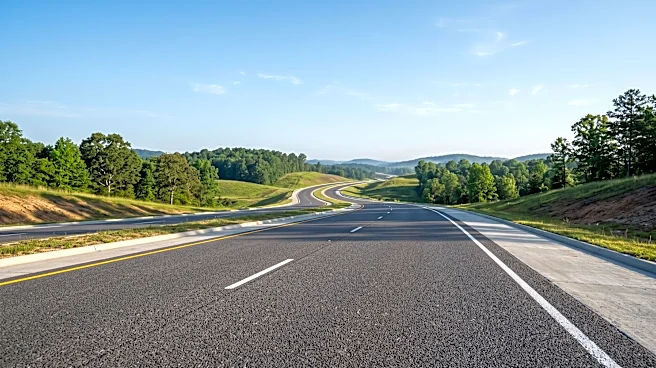
The first segment of the Birmingham Northern Beltline, a long-planned 52-mile highway project, has officially opened. This initial 1.88-mile section connects State Route 79 and State Route 75 in northeast Jefferson County, Alabama. Governor Kay Ivey announced
the opening, highlighting the collaborative efforts of Alabama’s congressional delegation, including United States Representative Gary Palmer and United States Senator Katie Britt, in securing federal funding. The project, which has faced repeated delays due to funding shortages, received approximately $525 million in federal funding for its first 10-mile segment, with $369 million from the Appalachian Development Highway System and $150 million directly from the United States Department of Transportation. Former United States Representative Spencer Bachus and former United States Senator Richard Shelby were instrumental in establishing the federal funding path for the Beltline through the Appalachian Development Highway System. The Alabama Department of Transportation (ALDOT) is continuing work on the remaining portions, with plans to award contracts for multiple phases in 2027.
Why It's Important?
The opening of this first segment is a significant milestone for Alabama's infrastructure and economic development. The full 52-mile Northern Beltline is projected to generate up to $1.9 billion annually in statewide economic output and support over 11,700 jobs each year upon completion, according to a study by the University of Alabama’s Center for Business and Economic Research. This project is expected to enhance cross-region accessibility, reduce commute times, improve road safety, and stimulate economic growth in Jefferson and surrounding counties, including Blount County. The involvement of current and former congressional leaders underscores the project's importance at both state and federal levels, demonstrating a sustained commitment to regional connectivity and economic prosperity. The successful securing of substantial federal funding highlights the impact of congressional advocacy on large-scale infrastructure initiatives.
What's Next?
Following the opening of the first segment, attention will now shift to the construction of the remaining portions of the Northern Beltline. ALDOT is actively working to advance the project, with current plans to award contracts for multiple phases in 2027. The next section is anticipated to connect the Northern Beltline to the Interstate 65 corridor by 2030. The full 52-mile highway will ultimately span from I-459 in Bessemer to I-59 in northeast Jefferson County. Continued advocacy from elected officials, such as Representative Palmer and Senator Britt, will be crucial for maintaining momentum and securing further funding. The project's completion is expected to bring long-term benefits, including improved emergency response times and increased opportunities for economic development and workforce access across the region.
Beyond the Headlines
The Birmingham Northern Beltline project represents a broader trend of long-term infrastructure investments aimed at fostering regional economic development and improving quality of life. The decades-long planning and persistent funding challenges highlight the complexities inherent in large-scale public works. The project's reliance on federal funding mechanisms, such as the Appalachian Development Highway System, illustrates how specific legislative frameworks can be leveraged to support regional growth. The involvement of multiple generations of political leaders, from former Senator Shelby to current Senator Britt and Representative Palmer, underscores the enduring commitment required for such ambitious undertakings. Furthermore, the project's anticipated economic impact, including job creation and increased economic output, reflects the significant role infrastructure plays in shaping a region's future and its ability to attract investment and talent.