







What's Happening?
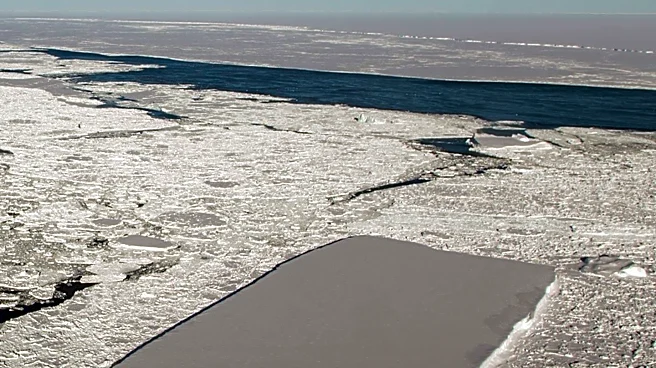
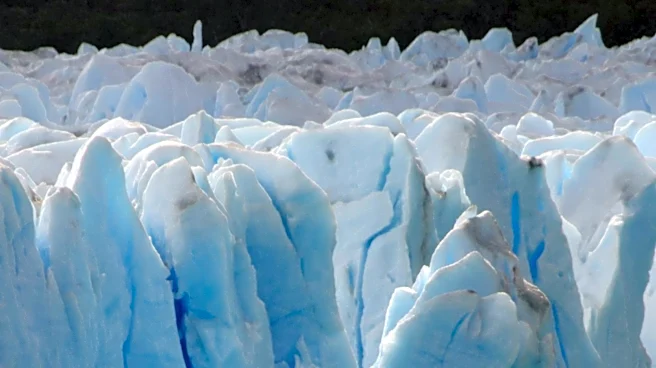
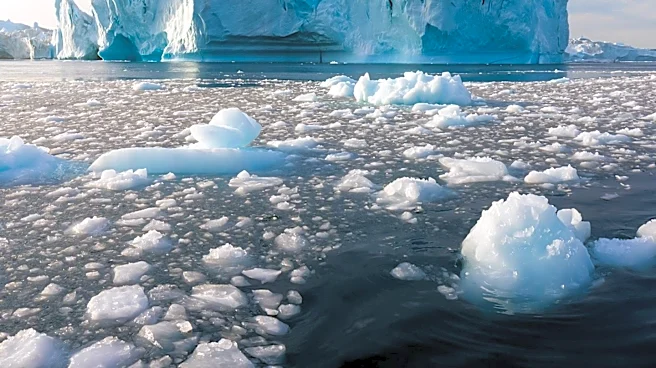
A recent study has highlighted the uneven impact of Antarctic ice melt on global sea levels. The research, conducted by a team of scientists, utilized computer models to explore how melting ice in Antarctica affects global climate and sea levels. The study found
that while the Antarctic ice sheet holds enough water to raise global sea levels by approximately 190 feet, the actual impact varies significantly by region. This variation is due to gravitational effects and the Earth's rotation, which cause some areas to experience higher sea-level rises than others. The study emphasizes the importance of reducing greenhouse gas emissions to mitigate these effects, as high emissions could destabilize both the West and East Antarctic ice sheets, leading to significant sea-level rise.
Why It's Important?
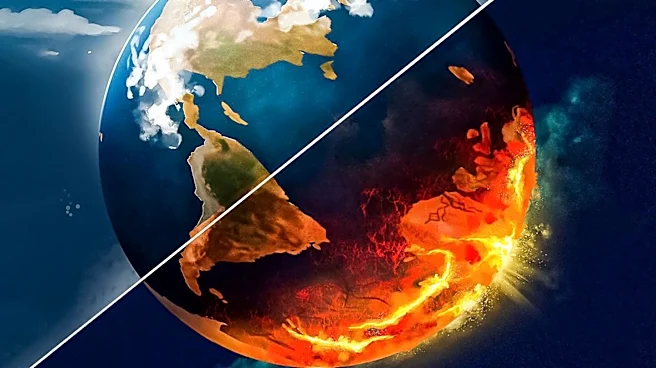
The findings underscore the critical need for global climate action, particularly in reducing greenhouse gas emissions. The potential for significant sea-level rise poses existential threats to low-lying coastal and island communities, which are already experiencing the detrimental impacts of rising seas. The study's results highlight the importance of adhering to international climate agreements, such as the Paris Agreement, to limit global warming and its associated impacts. Failure to do so could result in catastrophic sea-level rise, affecting millions of people worldwide and leading to severe economic and environmental consequences.
What's Next?
The study suggests that continued research and monitoring of Antarctic ice melt are essential to better understand and predict future sea-level changes. Policymakers and global leaders are urged to prioritize climate action and emissions reduction to prevent the worst-case scenarios outlined in the study. Additionally, there is a need for increased support and adaptation strategies for vulnerable communities facing the immediate impacts of sea-level rise.