




What's Happening?
Scientists have observed an unusual red aurora over Japan, suggesting that some solar storms may be more powerful than previously thought. The aurora, recorded in June 2024, reached altitudes between 500 to 800 kilometers, higher than typical for moderate
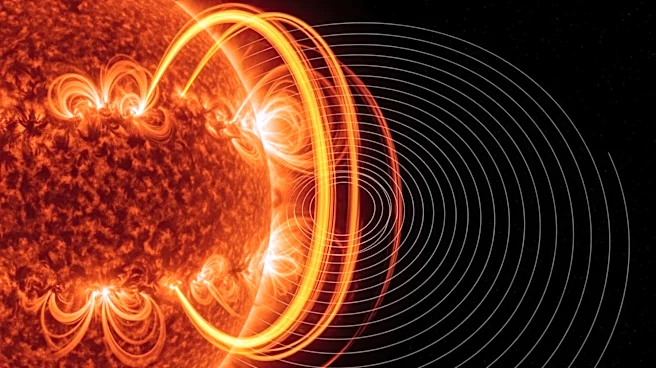
storms. This phenomenon indicates that even moderate geomagnetic storms can contain significant energy. The study, led by Tomohiro Nakayama, highlights the rarity of auroras in Japan due to its southern location. The red aurora was attributed to a dense solar wind interacting with Earth's magnetic field. The research, published in the Journal of Space Weather and Space Climate, aims to improve predictions of space weather that could impact satellites and power grids.
Why It's Important?
Understanding the true power of solar storms is crucial as the number of satellites in low Earth orbit increases. These storms can disrupt GPS, communications, and power grids, posing risks to technological infrastructure. The study's findings could lead to better predictions and preparations for such events, minimizing potential disruptions. As the 25th solar cycle peaks, the ability to forecast space weather becomes increasingly important for maintaining the functionality of critical systems worldwide.