






What's Happening?
The Congressional Budget Office (CBO) data from the 1980s has been pivotal in discussions about income inequality in the United States. A New York Times article from 1992, reported by Sylvia Nasar, highlighted how income gains during the 1980s were disproportionately
skewed towards the wealthiest individuals. This report included insights from economist Paul Krugman, who noted that the additional income from economic growth primarily benefited the top income earners. The article also referenced Lawrence Lindsey's observations that tax reforms in the early 1980s, which reduced the top federal income tax rate from 70% to 50%, encouraged high-income individuals to report more taxable income. This shift was partly due to a move away from tax-exempt investments like municipal bonds. The CBO's data became a focal point in political discussions, particularly during Bill Clinton's presidential campaign, as it illustrated the growing economic disparity and was used to argue that the middle class had not significantly benefited from the economic policies of the preceding Republican administrations.
Why It's Important?
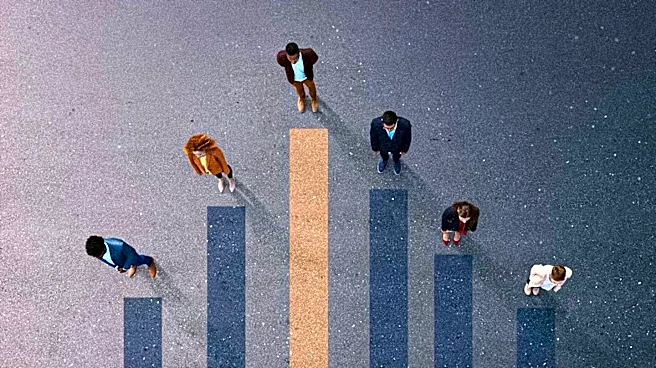
The focus on income inequality, as highlighted by the CBO data, has significant implications for U.S. economic policy and political discourse. The data underscored the widening gap between the wealthy and the rest of the population, which has been a persistent issue in American politics. This disparity has fueled debates over tax policies, economic reforms, and social justice. The political use of this data, particularly by figures like Bill Clinton, demonstrates how economic statistics can shape electoral strategies and policy priorities. The emphasis on inequality has also influenced subsequent administrations, including Barack Obama's, which continued to address wealth disparities. Understanding these trends is crucial for policymakers aiming to create more equitable economic conditions and for voters who are concerned about the distribution of wealth and opportunities in the country.
What's Next?
The ongoing debate over income inequality is likely to continue influencing U.S. policy decisions. Future administrations may face pressure to implement tax reforms aimed at reducing the wealth gap, such as increasing taxes on the wealthy or providing more support for lower-income groups. Additionally, discussions around economic inequality could impact legislative priorities, potentially leading to new policies focused on education, healthcare, and social welfare to address systemic disparities. As economic conditions evolve, the CBO's data will remain a critical tool for analyzing the effectiveness of these policies and guiding future economic strategies.
Beyond the Headlines
The focus on income inequality also raises ethical and philosophical questions about the nature of wealth distribution and the role of government in addressing economic disparities. Critics argue that excessive focus on reducing inequality could stifle economic growth and innovation, as wealth redistribution might discourage investment and entrepreneurship. Conversely, proponents of reducing inequality emphasize the moral imperative of ensuring a fairer distribution of resources and opportunities. This debate touches on broader cultural and societal values, influencing how Americans perceive success, merit, and the American Dream. As such, the discussion around income inequality is not just an economic issue but a reflection of the nation's values and priorities.