


What's Happening?
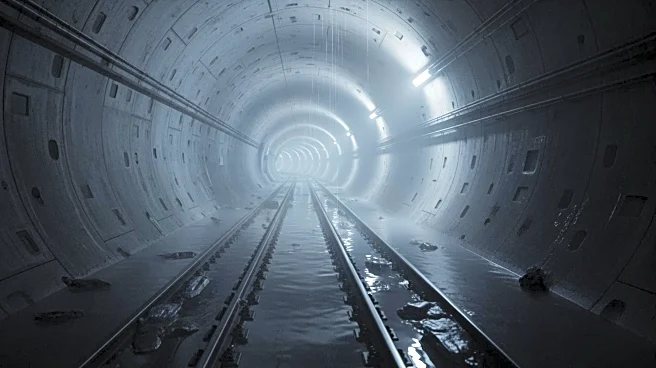
The New York City subway system is increasingly vulnerable to flooding due to climate change, with torrential rainstorms becoming more frequent and intense. The Metropolitan Transit Authority (MTA) reports that at least 200 of the city's 472 subway stations
have experienced flooding in the past two decades. The subway's infrastructure, built over a century ago, is not equipped to handle the current levels of stormwater, which often exceeds the capacity of the city's combined sewer system. The MTA is implementing various measures to mitigate flooding, including raising station entrances and installing new stormwater defenses. However, the aging system, with many pump rooms in poor condition, remains a significant challenge.
Why It's Important?
The flooding of New York's subway system poses a critical threat to the city's public transit infrastructure, which is essential for reducing carbon emissions by keeping cars off the streets. The subway system supports nearly 1.2 billion annual riders, and disruptions due to flooding can have significant economic impacts. The MTA's efforts to address these challenges are crucial for maintaining the city's resilience against climate change. The situation highlights the broader issue of aging infrastructure in the U.S. and the need for substantial investment to adapt to changing climate conditions.
What's Next?
The MTA has committed $700 million to new stormwater defenses in its latest capital plan, aiming to protect the subway system from future flooding. However, the agency acknowledges that it cannot address the issue alone and is working with the city's Department of Environmental Protection to improve the sewer system's capacity. The city is also exploring ecological solutions, such as restoring natural waterways, to manage stormwater more effectively. These efforts are part of a long-term strategy to enhance the city's resilience to climate change.