






What's Happening?
Khulna, once a thriving industrial city in Bangladesh, is experiencing a significant economic decline following the closure of its state-owned jute mills. The government shut down 25 jute mills in 2020 due to mounting losses, affecting over 50,000 workers
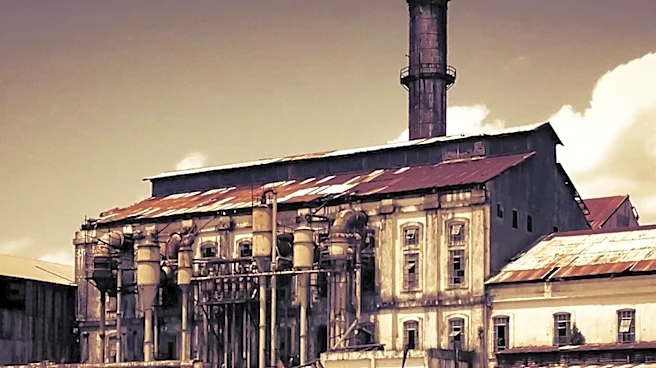
nationwide, with more than 29,000 in Khulna alone. The closures have led to a ripple effect on the local economy, impacting businesses that relied on the steady flow of workers and wages. The decline in industrial activity has also resulted in a population decrease, with many residents leaving in search of employment elsewhere. The city's infrastructure, including the Dada Match Factory and Khulna Newsprint Mills, remains unused, further contributing to the economic downturn.
Why It's Important?
The decline of Khulna's industrial sector has significant implications for the region's economy and social fabric. The loss of jobs has led to increased poverty and hardship for former workers and their families. The closures have also affected local businesses, reducing economic activity and leading to a decline in population. The situation underscores the challenges faced by regions dependent on a single industry and highlights the need for diversification and investment in new sectors to revitalize the economy. The decline of Khulna's industries also reflects broader issues of industrial policy and economic planning in Bangladesh.
What's Next?
Efforts to revitalize Khulna's economy include exploring new industrial opportunities and providing incentives for private investment. The government has leased some of the closed jute mills to private investors, but progress has been slow. There is a need for a comprehensive strategy to develop Khulna as an economic and industrial zone, leveraging its strategic location and infrastructure. The success of these efforts will be crucial in reversing the economic decline and providing new employment opportunities for the region's residents.