



What's Happening?
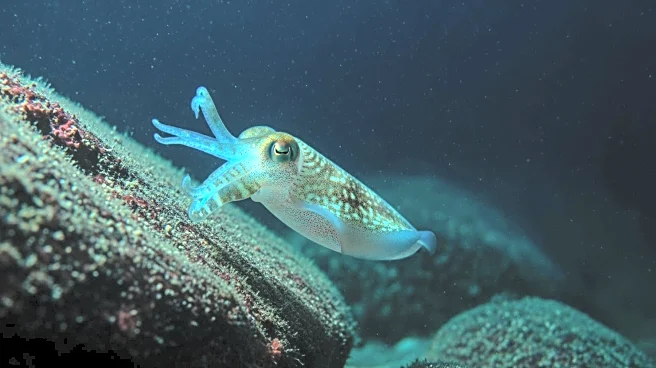
Researchers from the National Oceanography Center in Britain have discovered a deep-sea squid exhibiting unprecedented camouflage behavior in the Clarion-Clipperton Zone, a Pacific seafloor area targeted for deep-sea mining. The squid, suspected to be of
the whiplash species, was found at a depth of 13,500 feet, appearing motionless and buried upside down in the seafloor. Its tentacles were extended upwards, mimicking a sea sponge or coral stalk, a behavior not previously observed in squids. This mimicry could serve as a survival tactic, either to hide from predators like beaked whales or to lure prey by resembling non-threatening organisms. The discovery highlights the complex adaptations of deep-sea life and raises concerns about the impact of human activities, such as seabed mining, on these ecosystems.
Why It's Important?
The discovery of the squid's unique behavior underscores the rich biodiversity and adaptive strategies of deep-sea organisms, which remain largely unexplored. This finding is significant as it adds to the understanding of survival mechanisms in the abyss, where food is scarce. The Clarion-Clipperton Zone, where the squid was found, is under threat from potential seabed mining due to its rich deposits of nickel, copper, and cobalt, essential for technology manufacturing. The squid's behavior emphasizes the need for conservation efforts to protect these remote ecosystems from human activities that could disrupt the delicate balance of life in the deep sea.
What's Next?
The discovery calls for increased conservation efforts and further research into the deep-sea ecosystems of the Clarion-Clipperton Zone. As mining interests grow, there is a pressing need to understand the ecological roles and adaptations of deep-sea species to inform sustainable practices. Researchers may focus on studying the impacts of mining on these ecosystems and developing strategies to mitigate potential damage. The findings could also influence policy decisions regarding deep-sea mining and conservation priorities.
Beyond the Headlines
The squid's mimicry behavior highlights the broader implications of human impact on unexplored ecosystems. As deep-sea mining becomes more feasible, ethical considerations regarding the preservation of biodiversity and the unknown consequences of disrupting these habitats come to the forefront. The discovery serves as a reminder of the untapped complexity of life in the ocean's depths and the importance of balancing technological advancement with environmental stewardship.