







What's Happening?
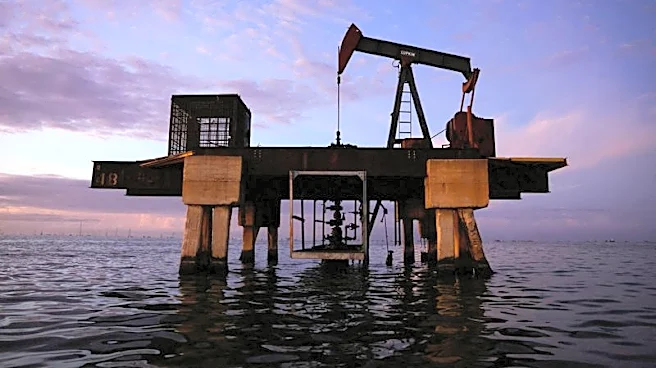
A new agreement between the U.S. and Venezuela regarding Venezuelan oil production is creating significant financial and geopolitical challenges for China. President Trump's deal with North American Blue Energy Partners (NABEP) grants the U.S. government
a 35% stake in NABEP's parent company and access to 20% of its oil production at cost, along with a right of first refusal on the remaining output. NABEP has secured 100-year rights to 17 oil fields in Venezuela, estimated to hold 65 billion barrels of proven reserves. This agreement impacts fields previously operated or targeted by Chinese and Russian companies. China has historically been a major financial backer of Venezuela, lending tens of billions of dollars, with analysts estimating Venezuela still owes Chinese creditors at least $10 billion. The new deal places a substantial portion of Venezuela's future oil production under U.S.-aligned control, making it more difficult for China to recover its debts and secure discounted oil.
Why It's Important?
This development is crucial because it signifies a potential triple loss for China: financial, commercial, and geopolitical. Financially, Chinese lenders face a more uncertain path to debt repayment as a significant portion of Venezuela's oil revenue will now be directed through U.S.-aligned interests. Commercially, Chinese companies, particularly independent refineries, may lose access to heavily discounted heavy crude from Venezuela, which has been vital for their profitability amidst weak domestic fuel demand. Geopolitically, the U.S. gains considerable influence over Venezuela's oil system, a domain China had been working to dominate. This undermines China's long-standing strategy in Venezuela, which relied on large loans, infrastructure investments, and diplomatic support to secure resource access and political loyalty. The shift could alter the balance of power in Latin America and impact global energy markets.
What's Next?
Chinese lenders and companies will likely need to reassess their strategies for debt recovery and oil procurement from Venezuela. The agreement could prompt China to seek alternative sources for heavy crude, potentially from Iran, Iraq, or Canada, albeit at higher prices. This could impact the profit margins of Chinese refineries. Geopolitically, Beijing may intensify its diplomatic efforts in other regions to secure resource access and maintain influence, or it might seek new avenues for engagement with Venezuela that do not directly conflict with the U.S. agreement. The long-term implications will depend on the stability of the U.S.-Venezuela partnership and how China adapts its foreign policy and economic strategies in response to this significant shift in the global energy landscape. The situation could also lead to increased competition for oil resources in other parts of the world.
Beyond the Headlines
The U.S.-Venezuela oil deal highlights a broader trend of geopolitical competition for critical resources and influence. It underscores the vulnerability of debt-for-resource agreements when political landscapes shift. For China, the deal challenges the efficacy of its 'debt diplomacy' model, particularly in regions where U.S. interests are strong. It also brings to light the complex interplay between economic leverage, energy security, and international relations. The agreement could serve as a precedent, encouraging other nations to reconsider their long-term resource agreements with countries heavily indebted to China. Furthermore, the deal's impact on global oil prices and supply chains could have ripple effects on various economies, potentially influencing inflation and economic stability worldwide. The ethical dimensions of such large-scale resource control agreements, particularly concerning the sovereignty and democratic processes of the resource-rich nation, will also remain a subject of international scrutiny.