








What's Happening?
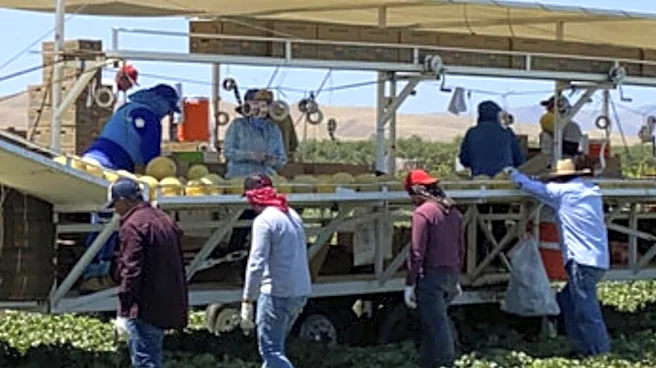
House Republicans, led by Agriculture Committee Chairman Glenn Thompson, have introduced the Securing Agriculture’s Workforce Act, aiming to significantly expand the H-2A visa program. This program currently allows farmers to hire foreign workers for temporary
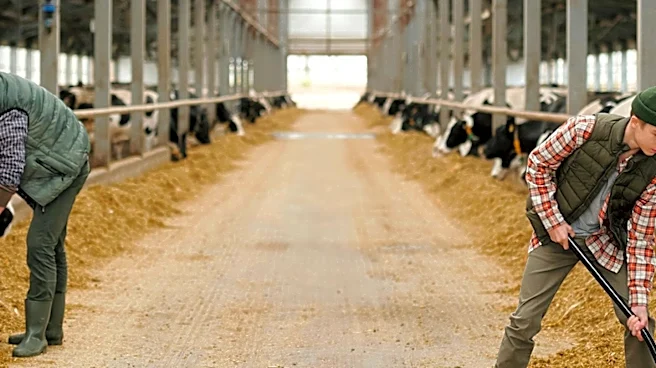
or seasonal agricultural jobs. The proposed legislation seeks to broaden the definition of 'temporary' work to include contracts lasting up to 350 days, thus enabling more year-round operations, such as dairy and livestock producers, to utilize the program. The bill also proposes changes to wage rules and simplifies the hiring process. It has garnered bipartisan support, with 45 Republicans and four Democrats co-sponsoring the bill, reflecting a recognition of the critical role immigrant workers play in the U.S. farm economy.
Why It's Important?
The proposed changes to the H-2A visa program are significant as they address the ongoing labor shortages in the U.S. agricultural sector, which farmers argue threaten the nation's food supply. By allowing more year-round agricultural operations to hire foreign workers, the bill aims to provide a stable workforce for farms that struggle to find domestic labor for physically demanding jobs. The legislation also includes provisions for undocumented farmworkers already in the U.S. to transition to H-2A status, potentially stabilizing the workforce further. This move could have substantial economic implications, ensuring the continuity of agricultural production and supporting the broader food supply chain.
What's Next?
The bill has been referred to the House Judiciary Committee for further consideration. If enacted, the amendments would take effect one year after the law is signed. The proposal is likely to face scrutiny and debate, particularly from those concerned about immigration enforcement and the impact of foreign labor on domestic wages. However, the bipartisan support suggests a strong possibility of progress, especially given the pressing labor needs in the agricultural sector. Stakeholders, including farm groups and immigrant advocates, will likely continue to lobby for and against various aspects of the bill as it moves through the legislative process.