



What's Happening?
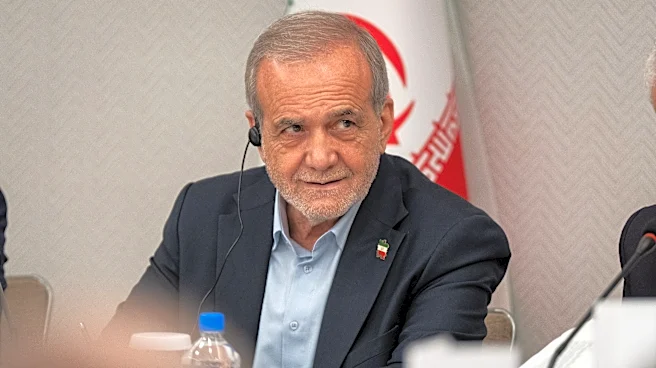
Iranian President Masoud Pezeshkian has stated that Iran is not willing to make concessions and emphasized the necessity of moving beyond the current 'no war, no peace' situation, as reported by Iran's official IRNA news agency. Pezeshkian indicated that Iranian officials
are engaged in daily discussions to resolve this state of affairs and achieve an understanding that upholds Iran's principles and values while deterring potential adversaries. He highlighted that ongoing uncertainty regarding the possibility of renewed conflict is negatively impacting the country's economy. The President stressed that war is not a viable solution and that the prolonged state of ambiguity is hindering economic progress and investment.
Why It's Important?
This declaration from President Pezeshkian underscores Iran's strategic stance in its international relations, particularly concerning the United States. The 'no war, no peace' situation, characterized by persistent tensions without outright conflict, has significant implications for global stability and energy markets. For the U.S., this situation contributes to ongoing geopolitical complexities in the Middle East, affecting its foreign policy objectives and regional alliances. The economic toll on Iran, as noted by Pezeshkian, suggests that continued uncertainty could lead to internal pressures, potentially influencing Iran's future diplomatic engagements or its approach to nuclear negotiations. The rejection of concessions signals a firm negotiating position, which could prolong efforts to de-escalate tensions and find a lasting resolution.
What's Next?
President Pezeshkian's remarks suggest that Iran will continue to seek a resolution to the 'no war, no peace' situation through diplomatic means, albeit without making concessions. This could involve intensified internal discussions within Iran to formulate a unified strategy. Internationally, this stance may lead to continued diplomatic stalemates with the U.S. and its allies, as Iran aims to preserve its strength and principles. The focus on overcoming the situation through 'logic' while maintaining Iran's power indicates a potential for continued engagement, but on terms favorable to Tehran. The economic impact, particularly the difficulty in attracting investment, will likely remain a key driver for Iran to seek a more stable international environment, potentially leading to new proposals or initiatives from Tehran in the future.
Beyond the Headlines
The 'no war, no peace' dynamic described by President Pezeshkian reflects a broader geopolitical strategy employed by various nations to maintain leverage without resorting to direct conflict. For Iran, this strategy allows it to project strength and resist external pressures while navigating complex regional and international relationships. However, the economic consequences highlighted by Pezeshkian reveal the inherent unsustainability of such a prolonged state of tension. This situation also raises ethical considerations regarding the impact on civilian populations, who bear the brunt of economic instability and the constant threat of conflict. The emphasis on 'power and dignity' suggests a deep-seated national pride and a desire for recognition on the global stage, which will likely continue to shape Iran's foreign policy decisions and its interactions with the international community.