







What's Happening?
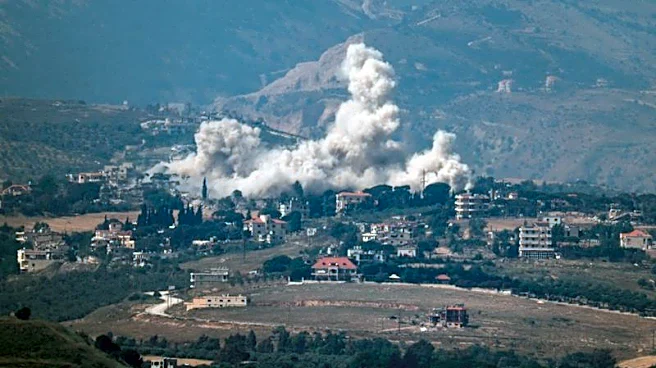
Israel and Lebanon have agreed to renew a ceasefire and establish security zones in southern Lebanon, from which Hezbollah will be banned. The agreement, facilitated by the U.S., aims to de-escalate tensions following the collapse of a previous ceasefire during
the Iran war. The ceasefire requires Hezbollah to withdraw its fighters from areas south of the Litani River and cease all hostilities. The Lebanese Armed Forces will take control of designated security zones. The agreement does not specify a timeline for Israeli withdrawal or Hezbollah's evacuation. The U.S. Secretary of State has labeled Hezbollah as an enemy of Lebanon, emphasizing the need for regional stability.
Why It's Important?
The renewed ceasefire between Israel and Lebanon is a critical step towards reducing hostilities in a region fraught with conflict. Establishing security zones could help stabilize southern Lebanon and prevent further escalation. The agreement reflects a concerted effort by the U.S. to mediate peace in the Middle East, highlighting its strategic interest in curbing Iranian influence through Hezbollah. However, the lack of a clear timeline for implementation and the exclusion of Hezbollah from negotiations may undermine the ceasefire's effectiveness. The situation remains precarious, with potential implications for regional security and international diplomatic relations.
What's Next?
The success of the ceasefire will depend on the cooperation of all parties involved, including the Lebanese government and Hezbollah. Continued diplomatic efforts will be necessary to ensure compliance and address any violations. The U.S. may play a pivotal role in monitoring the situation and facilitating further negotiations. The Lebanese government faces the challenge of asserting control over Hezbollah-dominated areas, which could strain its resources and political stability. The international community may need to provide support to Lebanon to maintain peace and rebuild affected regions. The outcome of this ceasefire could influence future peace initiatives in the Middle East.