







What's Happening?
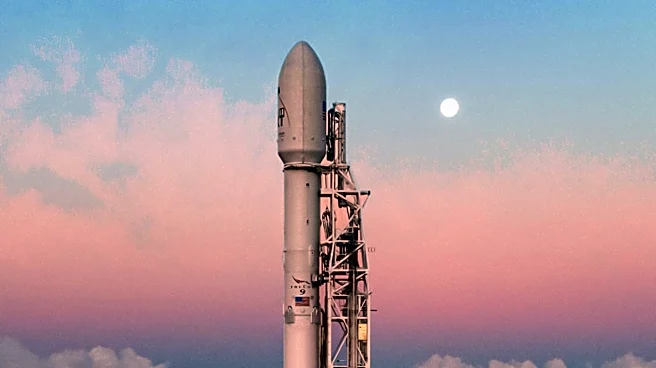
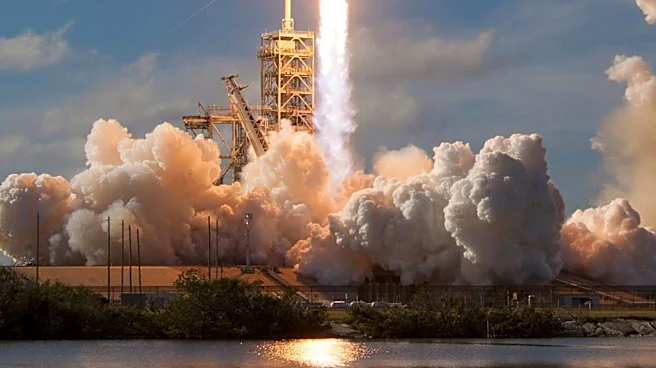
A SpaceX Falcon 9 rocket, which launched a pair of lunar landers in January 2025, has crashed into the Moon as predicted. The rocket's upper stage, after completing its mission, drifted off course and eventually collided with the lunar surface at a speed
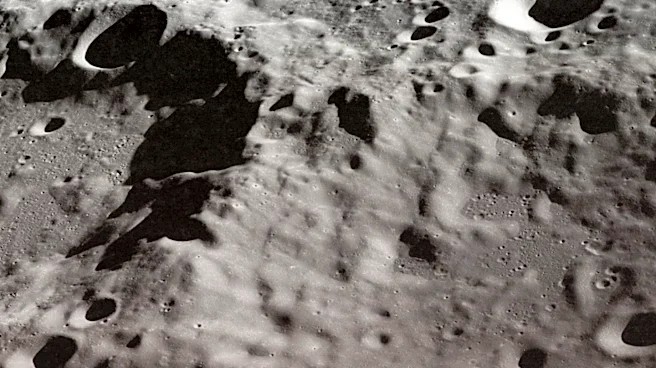
of 5,400 mph. The impact was not directly observed, but a telescope in Chile detected the resulting debris plume. This incident is part of a broader issue of lunar debris, as more countries and companies aim to explore and utilize the Moon. The crash site is near the Einstein Crater, a location difficult to observe from Earth. SpaceX is working with NASA to prevent future incidents, emphasizing that this crash was accidental due to gravitational forces.
Why It's Important?
The crash underscores the increasing activity around the Moon as nations and private companies, like SpaceX, pursue lunar exploration and potential colonization. The incident highlights the challenges of managing space debris, which could become more problematic as lunar missions increase. The U.S. and China are both racing to establish a presence on the Moon, which could lead to more debris if not managed properly. This event also raises questions about the sustainability of lunar exploration and the need for international cooperation in space debris management. The impact of such debris could affect future missions and the safety of lunar operations.
What's Next?
NASA's Lunar Reconnaissance Orbiter is expected to fly over the crash site to capture images of the impact crater. This will provide more data on the effects of such collisions and help in planning future missions. As lunar exploration intensifies, there will likely be increased focus on developing strategies to mitigate space debris. This could involve international agreements on debris management and the development of technologies to track and remove debris. The incident may also prompt discussions on the ethical and environmental implications of lunar exploration.