



What's Happening?
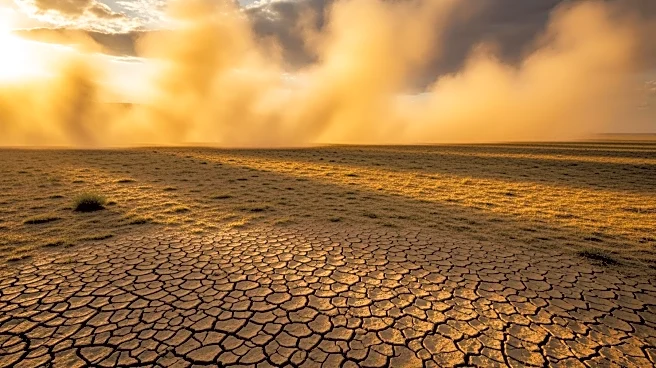
China and Mongolia are working together to address the issue of massive dust storms that have been affecting northern China, including Beijing. These storms are largely attributed to environmental degradation in Mongolia, where nearly 77% of the land
is classified as degraded. The two countries are collaborating on desertification prevention and control, with China exporting its expertise in this area to Mongolia. A major UN conference on desertification will be held in Ulaanbaatar, Mongolia, in August 2026, providing a platform for discussing solutions. China's efforts include supporting Mongolia's 'billion tree movement' and establishing a desertification prevention center in Ulaanbaatar. However, there are concerns about how Chinese measures, which often target herders, will be implemented in Mongolia, where nomadic herding is a key part of national identity.
Why It's Important?
The collaboration between China and Mongolia is crucial in addressing the environmental and health impacts of dust storms, which are exacerbated by climate change and land degradation. These storms pose significant challenges to air quality and public health in affected regions. The partnership highlights the importance of cross-border cooperation in tackling environmental issues that transcend national boundaries. It also underscores the need for sustainable land management practices that consider the cultural and economic contexts of local communities. The outcomes of this collaboration could influence global strategies for combating desertification and climate change.
What's Next?
The upcoming UN conference in Mongolia will be a critical moment for advancing international cooperation on desertification. It will provide an opportunity for China to showcase its leadership in environmental management and for Mongolia to gain support for its initiatives. The conference will also address the role of herders in maintaining biodiversity and preventing land degradation. As the collaboration progresses, it will be important to monitor the implementation of anti-desertification measures and their impact on local communities. The success of these efforts could serve as a model for other regions facing similar challenges.