

What's Happening?
The International Energy Agency (IEA) has issued a set of 10 measures aimed at reducing oil consumption amid soaring prices. The agency suggests that governments, businesses, and households adopt practices such as working from home, reducing highway speed
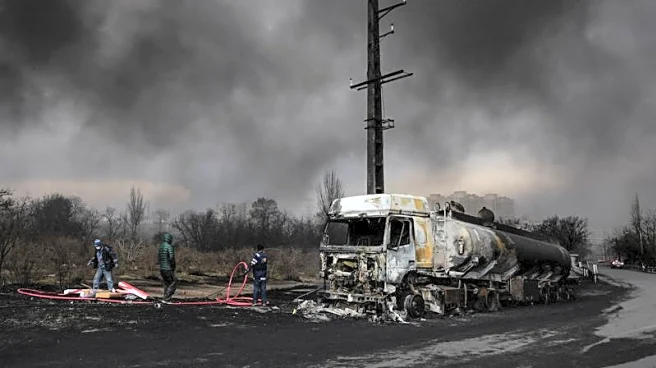
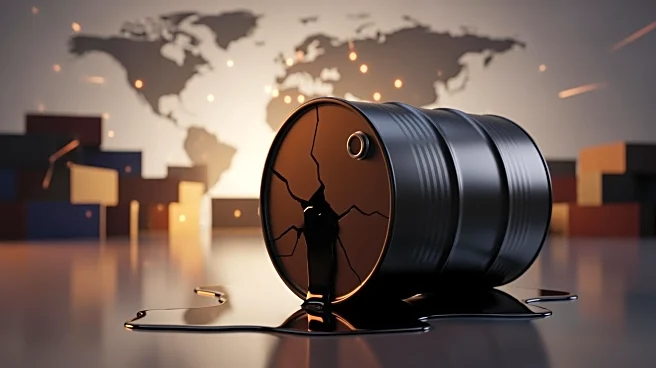
limits, car sharing, and cutting air travel. These recommendations come in response to a significant energy crisis triggered by ongoing conflicts in the Middle East, which have disrupted global oil supplies. The price of Brent crude has surged, reaching $106 per barrel, with potential further increases. The IEA emphasizes that while these measures can alleviate some pressure, they cannot fully counteract the market disruptions caused by the conflict.
Why It's Important?
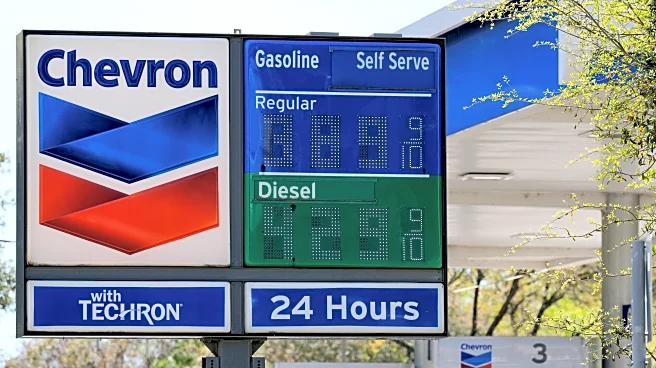
The IEA's recommendations highlight the urgent need for adaptive strategies in energy consumption to address the current crisis. For the U.S., these measures could help mitigate rising fuel costs, which impact both consumers and businesses. Encouraging remote work and reducing travel can lead to significant savings and reduce dependency on volatile oil markets. This situation underscores the broader implications of geopolitical conflicts on global energy stability and the necessity for sustainable energy practices. The U.S. and other member countries of the IEA are urged to consider these measures to maintain economic stability and energy security.
What's Next?
As the energy crisis persists, governments and businesses may need to implement more stringent measures to manage oil consumption. The IEA's guidelines could prompt policy changes and encourage investment in alternative energy sources. Additionally, the situation may accelerate discussions on energy independence and the transition to renewable energy. Stakeholders, including policymakers and industry leaders, will likely explore long-term solutions to reduce reliance on oil and enhance energy resilience.