







What's Happening?
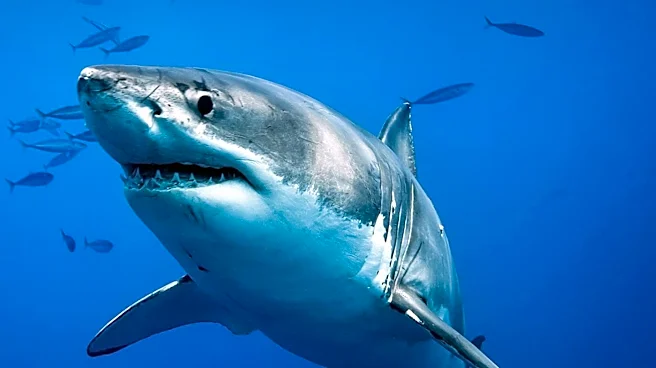
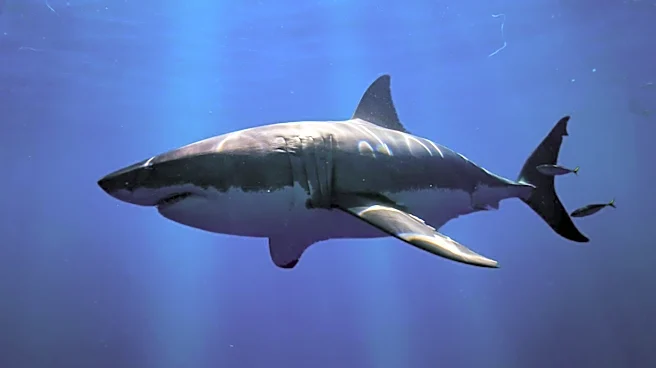
Percy, a subadult great white shark, has been tracked moving up the coast of Long Island, New York, likely heading towards cooler northern waters. This movement was recorded by OCEARCH, a global nonprofit organization focused on researching and protecting
marine life. Percy was tagged over a year ago off the coast of Nova Scotia as part of OCEARCH's summer residency field research study. Since then, Percy has traveled approximately 4,660 miles, moving from Canada down into the Gulf and back up the East Coast. Recently, Percy was detected about 14 miles from Ocean Beach, New York, after traveling from Sea Isle City, New Jersey, in less than a day. This tracking is part of OCEARCH's efforts to understand the migration habits and behaviors of young white sharks.
Why It's Important?
The tracking of Percy provides valuable data on the migratory patterns of great white sharks, which is crucial for understanding their behavior and ecology. This information can help in the conservation efforts of these apex predators, which play a significant role in maintaining the balance of marine ecosystems. By understanding their movements, scientists can better predict shark activity and potentially mitigate human-shark interactions, enhancing safety for coastal communities. Additionally, this research contributes to the broader understanding of marine life migration in response to environmental changes, such as ocean temperature shifts, which are increasingly relevant in the context of climate change.
What's Next?
OCEARCH will continue to monitor Percy's movements using their Global Shark Tracker app, which allows real-time tracking of over 400 ocean animals. This ongoing research will provide further insights into the seasonal movements of young white sharks and their responses to environmental changes. The data collected will be used to inform conservation strategies and public safety measures. As Percy continues his journey, researchers will analyze the data to identify patterns and potential changes in migratory routes, which could have implications for marine conservation policies.