




What's Happening?
Mumbai, formerly known as Bombay, stands as India's largest city and a pivotal financial and cultural center. The city is renowned globally for hosting Bollywood, the world's largest film industry. Its historical tapestry is rich and diverse, shaped by
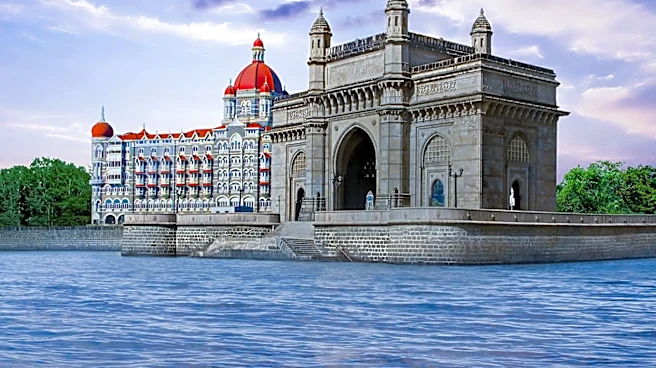
various influences including ancient Indian empires, a period of Muslim rule from 1348 to 1391, Portuguese colonial rule between 1534 and 1661, and British rule until India gained independence in 1947. This blend of historical periods is visibly reflected in Mumbai's architecture and cultural landscape. Prominent landmarks such as the Gateway of India, constructed by the British Raj in 1924, and other colonial structures like the High Court, the former Prince of Wales Museum, and Victoria railway station, underscore its colonial past. The city also features historical sites like Haji Ali, a tomb and mosque built in 1431 by a Muslim merchant. Mumbai's transformation into its current name occurred in 1995, a decision by the local ruling party to honor the region's Maratha heritage. Today, modern skyscrapers define its skyline, symbolizing its status as India's financial heart, alongside bustling markets and contemporary shopping centers.
Why It's Important?
Mumbai's role as India's financial and cultural capital has significant implications for global business and cultural exchange. Its status as the home of Bollywood makes it a major player in the international entertainment industry, influencing global trends and providing a vast market for creative content. The city's historical evolution, marked by diverse colonial and indigenous influences, offers a unique case study in urban development and cultural synthesis, attracting tourists and researchers alike. For U.S. businesses, Mumbai represents a key gateway to the Indian market, particularly in finance, technology, and entertainment sectors, given its robust economic infrastructure and large, diverse population. The presence of major financial institutions and a dynamic business environment makes it an attractive destination for foreign investment and partnerships. Furthermore, Mumbai's cultural vibrancy, from its historical monuments to its modern arts scene, fosters cross-cultural dialogue and opportunities for international collaboration in arts and tourism. The city's continuous growth and development underscore its importance as a global metropolis with enduring historical depth.
What's Next?
Mumbai is expected to continue its trajectory as a leading global city, with ongoing developments in infrastructure and urban planning to support its growing population and economic activities. The city's financial sector will likely see further integration with global markets, potentially attracting more international investment and fostering innovation in fintech and other emerging industries. In the cultural sphere, Bollywood's influence is anticipated to expand, with increasing collaborations and distribution deals that could further globalize Indian cinema. Efforts to preserve Mumbai's rich historical architecture while accommodating modern expansion will remain a critical challenge, balancing heritage conservation with urban development needs. The city's tourism sector is also poised for growth, with continued promotion of its diverse attractions, from historical sites to vibrant markets and modern amenities. As a major hub, Mumbai will likely play an increasingly prominent role in regional and international dialogues on economic development, cultural exchange, and sustainable urban living.
Beyond the Headlines
Beyond its immediate economic and cultural contributions, Mumbai embodies a complex interplay of tradition and modernity. The city's historical layers, from ancient settlements to colonial imprints and contemporary skyscrapers, reflect a continuous process of adaptation and transformation. This dynamic environment presents unique challenges and opportunities, particularly in addressing social inequalities and environmental sustainability within a rapidly expanding urban landscape. The cultural diversity, a legacy of its varied rulers and migrations, contributes to a rich social fabric but also poses questions about identity and integration in a globalized world. Mumbai's ability to blend its historical heritage with a forward-looking vision for economic and technological advancement offers valuable lessons for other developing megacities. The city's resilience, demonstrated through its capacity to absorb diverse influences and emerge as a vibrant global center, highlights the enduring power of human ingenuity and cultural exchange.