







What's Happening?
Researchers at Wake Forest University School of Medicine have developed a novel 3D-printing method aimed at improving cell-based treatments for Type 1 diabetes. This method focuses on maintaining the health and function of insulin-producing cells. In
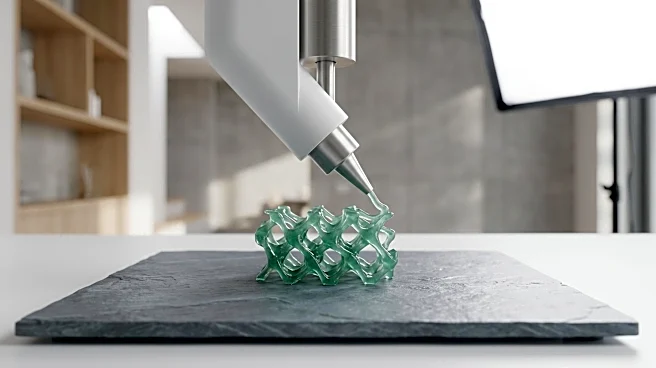
laboratory tests, donated human pancreatic islets, embedded within the 3D-printed tissue, remained viable and responsive to glucose for 21 days. This significantly outperforms conventional laboratory culture methods, which show a rapid decline in islet function. The 3D-printed tissue is created using a specialized printer and a bioink composed of alginate (derived from seaweed) and material from donated human pancreatic tissue. This bioink is designed to mimic the natural pancreatic environment, providing structural support and preserving proteins. The printing process was also optimized to minimize stress on the islets. After printing, over 85% of the islet cells remained viable and continued to release insulin in response to glucose changes, even at high concentrations relevant for clinical application.
Why It's Important?
This advancement holds significant promise for the U.S. healthcare sector, particularly for the millions of individuals living with Type 1 diabetes. Current treatments often involve insulin therapy and blood sugar monitoring, while islet transplantation, though effective, is limited by a shortage of donated islets, poor cell survival, and immune rejection. This 3D-printing method addresses key barriers by creating a supportive environment that prolongs islet viability and function. The ability of the printed material to block larger molecules while allowing nutrients to pass through suggests it could act as a physical barrier against immune system antibodies, potentially protecting transplanted cells from rejection. If successful in further trials, this technology could lead to more widely available and effective cell-based therapies, reducing the reliance on donor organs and improving the quality of life for Type 1 diabetes patients. It represents a significant step towards regenerative medicine and personalized treatments.
What's Next?
The current findings provide a strong foundation for continued development, but further research is necessary before human trials. Researchers are now evaluating the 3D-printed tissue in preclinical models of diabetes to assess its functionality after transplantation, its ability to develop a blood supply, and its role in regulating blood sugar. They are also studying its interaction with the immune system, specifically whether the material can protect transplanted islets from rejection. While additional research is needed, the findings suggest that 3D-printed pancreatic tissue could become a promising platform for future cell-based diabetes therapies. Dr. Giuseppe Orlando, professor of surgery and transplant surgery at Wake Forest University School of Medicine, anticipates that advances in 3D bioprinting will fundamentally transform transplantation, moving towards the on-demand fabrication of living, patient-specific tissues and organs.
Beyond the Headlines
Beyond its immediate application in Type 1 diabetes, this research highlights the broader potential of 3D bioprinting in regenerative medicine. The ability to engineer complex tissues with specific biological functions could revolutionize treatments for various organ failures and chronic diseases. This technology raises ethical considerations regarding the sourcing of biological materials, the long-term safety of bio-printed organs, and equitable access to such advanced therapies. The use of AI in optimizing printing processes and material composition could further accelerate developments in this field. This breakthrough also underscores the importance of interdisciplinary research, combining expertise in materials science, biology, and engineering. The long-term shift could see a move away from traditional organ donation models towards personalized, lab-grown organs, fundamentally altering the landscape of transplant medicine and offering new hope for patients with chronic conditions.