






What's Happening?
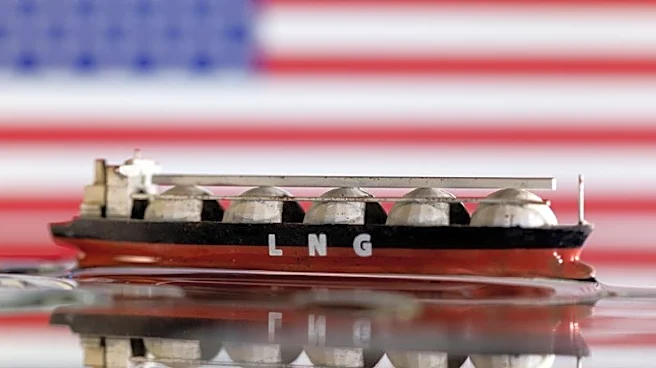
U.S. Transportation Secretary Sean P. Duffy announced the Maritime Administration (MARAD) has approved a deepwater port license application for ST LNG, LLC. This $8.2 billion project near Matagorda, Texas, is expected to support 2,000 construction jobs
and up to 855 permanent jobs, while expanding America’s LNG export capacity by 7–9%. The port will feature four 2.1 million tonnes per annum (MTPA) liquefaction systems. Secretary Duffy also announced modifications to certain LNG regulations to fast-track new liquefied natural gas infrastructure projects, lower energy costs, and expand export capacity. The Pipeline and Hazardous Materials Safety Administration (PHMSA) published a Notice of Proposed Rulemaking (NPRM) to update LNG standards, incorporating advanced, cost-saving technologies like pipe-in-pipe systems and membrane storage tanks, which are projected to generate $100 million in annual savings.
Why It's Important?
The approval of the ST LNG deepwater port license and the regulatory changes signify a major push by the Trump Administration to bolster U.S. energy independence and export capabilities. This initiative is expected to create thousands of jobs in Texas and the Gulf region, providing a significant economic boost. By expanding LNG export capacity, the U.S. aims to solidify its position as a leading global energy exporter, which could influence international energy markets and geopolitical dynamics. The modernization of LNG regulations, by incorporating advanced technologies and streamlining processes, is intended to reduce red tape, accelerate infrastructure development, and lower energy costs for consumers and industries. This move is critical for strengthening supply chains and ensuring a reliable energy supply, particularly for U.S. allies.
What's Next?
Construction of the ST LNG deepwater port is anticipated to commence in 2027, with operations expected to begin in 2029. The port, located approximately 10.4 miles offshore Matagorda, Texas, will include 20 platforms, four LNG floating storage units, four mooring systems, and 7.7 miles of pipeline at full capacity. The regulatory changes proposed by PHMSA will move through a rulemaking process, with the goal of codifying updated LNG standards. These changes are expected to facilitate the deployment of cutting-edge technologies in LNG facilities, further enhancing safety and efficiency. The administration aims to continue accelerating the safe development of crucial energy infrastructure, reinforcing the U.S.'s role as a global energy leader.
Beyond the Headlines
The fast-tracking of LNG projects and regulatory updates reflect a broader strategic objective to leverage America's natural gas resources for economic growth and international influence. By reducing review times and modernizing standards, the administration is attempting to balance environmental considerations with economic development and energy security. The emphasis on 'unleashing American energy' and becoming the 'number one energy exporter' suggests a long-term vision for U.S. energy policy that prioritizes domestic production and global market dominance. This approach could have lasting implications for environmental policy, trade relations, and the global energy transition, as increased LNG exports might impact the adoption of renewable energy sources in importing nations.