





What's Happening?
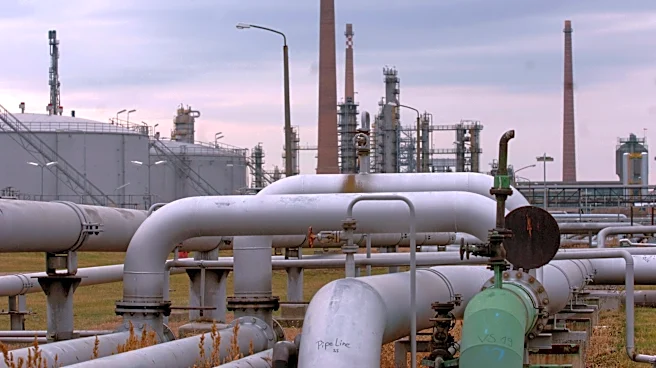
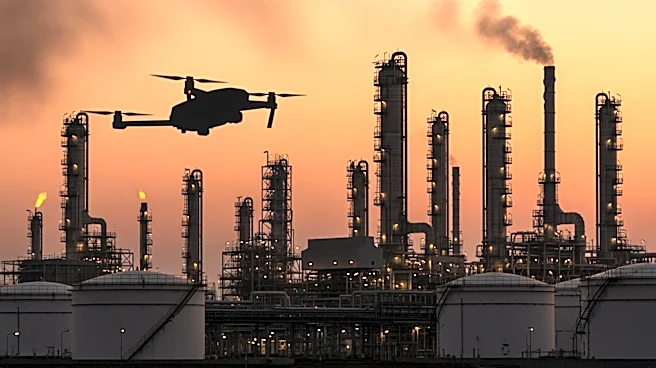
Ukraine has intensified its military campaign against Russian oil infrastructure, significantly impacting Russia's oil export capabilities. Since March 21, Ukraine has targeted Russian ports and refineries, aiming to disrupt oil transhipments and counteract
the effects of a U.S. sanctions waiver on Russian oil. Ukrainian President Volodymyr Zelenskyy reported that these actions have resulted in an estimated $2.3 billion loss in Russian oil revenue for March alone. The strikes have led to a reduction in Russia's oil transhipments by 300,000 barrels per day and refined products by 200,000 barrels per day. Despite a U.S. waiver intended to stabilize global oil prices, Russian exports have declined to their lowest levels since 2023, forcing Russia to cut crude production by 300,000 to 400,000 barrels per day.
Why It's Important?
The ongoing conflict and Ukraine's strategic strikes on Russian oil infrastructure have significant implications for global energy markets and geopolitical dynamics. The reduction in Russian oil exports could exacerbate global oil supply issues, especially given the current high demand and price volatility. This situation underscores the broader economic impact of the Russia-Ukraine conflict, affecting not only the involved nations but also international stakeholders reliant on stable oil supplies. Additionally, the decline in Russian oil revenues could strain Russia's economy, potentially influencing its military and political strategies. The situation also highlights the effectiveness of Ukraine's military tactics in leveraging economic pressure as a tool in the conflict.
What's Next?
As Ukraine continues its campaign against Russian oil infrastructure, further disruptions in oil exports are likely. This could lead to increased global oil prices and further economic strain on Russia. The international community, particularly countries dependent on Russian oil, may need to seek alternative energy sources or increase diplomatic efforts to stabilize the situation. Additionally, Russia may respond with intensified military actions or seek new alliances to mitigate the economic impact. The U.S. and European Union's roles in providing support to Ukraine and imposing sanctions on Russia will be crucial in shaping the conflict's trajectory.
Beyond the Headlines
The conflict's impact on global energy markets highlights the interconnectedness of geopolitical events and economic stability. The situation raises ethical questions about the use of economic pressure in warfare and the broader consequences for civilian populations affected by rising energy costs. It also underscores the importance of energy diversification and the potential for renewable energy sources to mitigate reliance on geopolitically sensitive oil supplies. The conflict may accelerate shifts in global energy policies and investments, with long-term implications for international relations and economic strategies.