
What's Happening?
General Ronald Clark, commander of the U.S. Army Pacific (USARPAC), emphasized the importance of military readiness and deterrence during the largest-ever Exercise Balikatan held in the Philippines. This
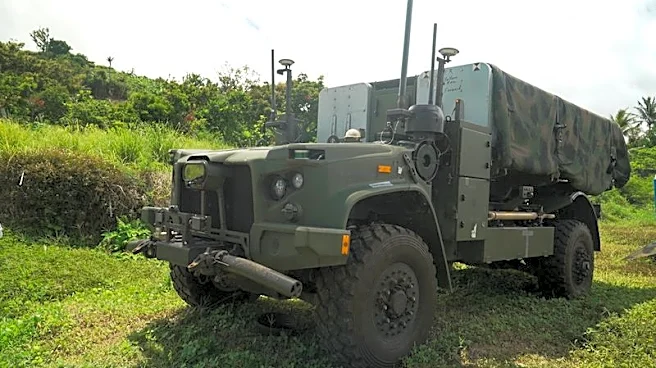
exercise, which took place from April 20 to May 8, 2026, involved troops from seven countries, including the United States, Australia, Canada, France, Japan, and New Zealand. The exercise focused on large-scale combat operations and territorial defense, marking a shift from previous counterinsurgency and counterterrorism focuses. The U.S. military rehearsed operations critical for containing the Chinese navy in potential conflicts over Taiwan, such as rapidly deploying HIMARS rocket launchers and NMESIS anti-ship missile systems to remote islands. General Clark highlighted the importance of building trust and partnerships with allied nations to strengthen military capabilities and readiness.
Why It's Important?
The strategic military exercises in the Philippines underscore the U.S. commitment to maintaining a strong military presence in the Asia-Pacific region, particularly in light of rising tensions with China. By enhancing military readiness and fostering international partnerships, the U.S. aims to deter potential conflicts and ensure regional stability. The involvement of multiple nations in Exercise Balikatan reflects a collective effort to address security challenges and demonstrates the importance of multinational cooperation in defense strategies. The exercises also provide an opportunity for the U.S. military to test and refine its capabilities, ensuring that it remains prepared to respond to various threats in the region.
What's Next?
The U.S. Army Pacific plans to continue its focus on enhancing military capabilities and partnerships through ongoing exercises and strategic initiatives. The development of Multi-Domain Task Forces (MDTF) and the activation of the Multi-Domain Command Pacific are expected to enhance the responsiveness and effectiveness of U.S. military operations in the region. These efforts will likely involve further collaboration with allied nations to address shared security concerns and strengthen collective defense capabilities. The U.S. military will continue to adapt its strategies and technologies to meet evolving threats and maintain a competitive edge in the Asia-Pacific theater.