






What's Happening?
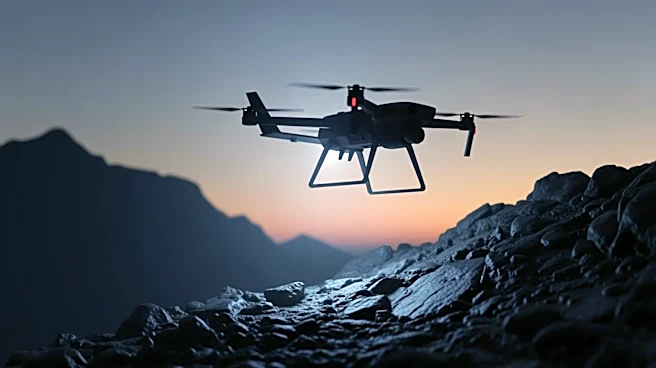
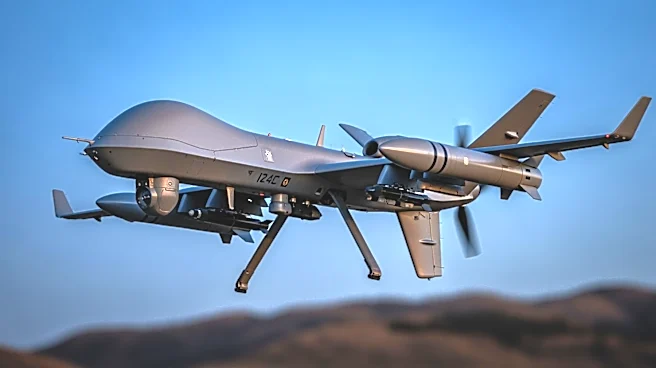
The US Army, in collaboration with defense industry operators, has successfully tested a logistics drone equipped with a rocket launcher at Fort Rucker, Alabama. The TRV 150 drone, developed by Survice Engineering Company, was originally designed for
logistics missions but has now been adapted to carry and fire a three-shot rocket launcher. This adaptation allows the drone to perform both resupply and attack roles, providing ground forces with the striking power of a helicopter without risking aircrew lives. The test involved pairing the TRV 150 with BAE Systems' Advanced Precision Kill Weapon System (APKWS), which is already used on platforms like the AH-64 Apache helicopter. The drone's ability to autonomously calculate flight paths and targeting simplifies its operation, making it a versatile tool for military applications.
Why It's Important?
This development is significant as it represents a shift in military strategy towards more versatile and autonomous systems. By equipping logistics drones with lethal payloads, the US military can enhance its operational flexibility and reduce risks to personnel. The ability to switch between logistics and attack roles makes these drones a valuable asset in modern warfare, where adaptability and rapid response are crucial. The lessons learned from the conflict in Ukraine, where diverse drone applications have been pivotal, are being integrated into US military practices. This innovation could lead to a broader adoption of multi-role drones, potentially transforming military logistics and combat operations.
What's Next?
Following the successful test, the US Army and its partners may continue to refine the capabilities of the TRV 150 drone and explore additional payload options. The Pentagon's focus on swappable payloads suggests that further experimentation and fielding of drones for various missions will continue. As these systems are integrated into military operations, there may be increased investment in drone technology and training for personnel to maximize their effectiveness. The broader implications for military strategy and procurement could include a shift towards more autonomous and flexible systems across different branches of the armed forces.