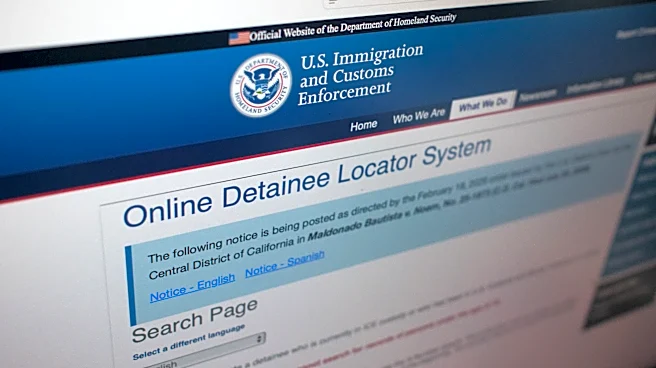









What's Happening?
U.S. Citizenship and Immigration Services (USCIS) announced a new annual asylum fee of $105, set to take effect on October 16, 2026. This information was disseminated via a USCIS bulletin dated September 30, 2026. The fee is an administrative charge and does
not influence the outcome or decision of an individual's asylum claim. Applicants are advised to have their case information readily available, including their USCIS notice, A-Number, and Form I-589 receipt number, before submitting any payment. It is crucial for individuals to follow the current official portal instructions for payment. The bulletin also clarifies that the payment process for immigration court cases differs from USCIS procedures, as the Executive Office for Immigration Review (EOIR) has its own separate payment system, which typically involves a written annual asylum fee order from an immigration judge or the Board of Immigration Appeals. Therefore, asylum seekers must confirm which agency is handling their case before proceeding with any payment.
Why It's Important?
The introduction of an annual asylum fee by USCIS marks a significant change in the asylum application process in the United States. While the fee itself is not determinative of an asylum claim, it adds a new financial requirement for individuals seeking protection. This could potentially create an additional barrier for asylum seekers, many of whom may already be facing economic hardship. The distinction between USCIS and EOIR payment processes highlights the complexity of the U.S. immigration system, requiring applicants to navigate different administrative procedures based on the stage and jurisdiction of their case. This complexity underscores the importance of legal counsel for asylum seekers to ensure compliance with new regulations and avoid potential pitfalls related to non-payment or incorrect payment procedures. The fee's implementation could also be seen as part of broader efforts to manage the costs associated with processing asylum claims, potentially shifting some of the financial burden to applicants.
What's Next?
As the October 16, 2026, effective date approaches, asylum applicants will need to be prepared to incorporate this new $105 annual fee into their application process. Individuals who receive notices regarding this fee, especially overdue notices, are strongly advised to contact their legal teams promptly. Legal counsel can help clarify the specific instructions applicable to their case, as court orders and agency directives can influence how non-payment is handled. It is anticipated that USCIS will provide further detailed guidance on the payment mechanism and any potential exemptions or waivers, though the current bulletin does not specify such details. Asylum advocacy groups and legal aid organizations will likely play a crucial role in informing affected individuals about these changes and assisting them in navigating the new financial requirement to ensure that the fee does not unduly impede access to asylum protections.
Beyond the Headlines
The implementation of an annual asylum fee raises broader questions about access to justice and the financial accessibility of humanitarian protections in the United States. While the fee is relatively modest, it contributes to the overall financial burden on asylum seekers, who often arrive with limited resources. This policy could be viewed as part of a trend towards increasing user fees for immigration services, which may disproportionately affect vulnerable populations. The principle that the fee does not decide the asylum claim is critical, but the administrative hurdle itself could still present challenges. This development may also prompt discussions among policymakers and advocacy groups regarding the balance between funding immigration services and ensuring equitable access to asylum for those fleeing persecution. The long-term implications could include a re-evaluation of how immigration services are funded and whether such fees align with international humanitarian principles.