






What's Happening?
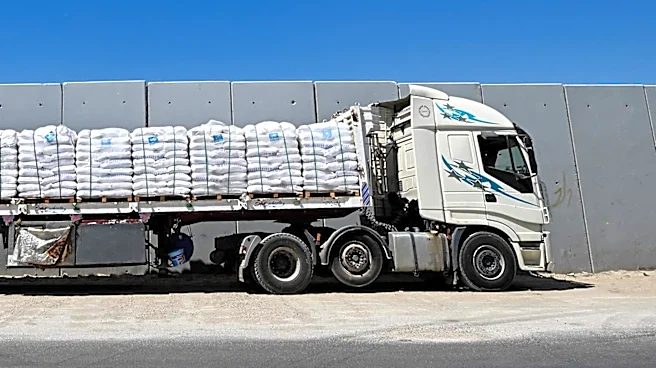
The Integrated Food Security Phase Classification (IPC) reports that food insecurity in Gaza has improved since a famine was declared last year, largely due to reduced conflict and increased aid. However, the situation remains critical, with most of the 2.1
million residents still facing inadequate food consumption. The IPC warns that any disruption to humanitarian access could quickly reverse recent gains. Despite improvements, Gaza remains in 'crisis' conditions, with over 200,000 residents experiencing 'emergency' levels of food insecurity. Israel, which controls much of the territory, disputes claims of widespread hunger, attributing issues to mismanagement by local authorities.
Why It's Important?
The situation in Gaza underscores the fragile nature of humanitarian improvements in conflict zones. While recent aid efforts have mitigated some of the worst effects of food insecurity, the region remains vulnerable to setbacks. This highlights the importance of sustained international support and the need for stable political conditions to ensure long-term food security. The ongoing challenges in Gaza also reflect broader issues of governance and resource management in areas affected by conflict, emphasizing the need for comprehensive strategies that address both immediate needs and underlying causes of food insecurity.
What's Next?
Continued international engagement is crucial to maintaining and building on the progress made in addressing food insecurity in Gaza. Humanitarian organizations may need to advocate for uninterrupted access to deliver aid and support local capacity-building efforts. Additionally, diplomatic efforts could focus on ensuring that political agreements facilitate rather than hinder humanitarian operations. Monitoring and evaluation of aid effectiveness will be essential to adapt strategies and ensure that resources are used efficiently to support those most in need.