




What's Happening?
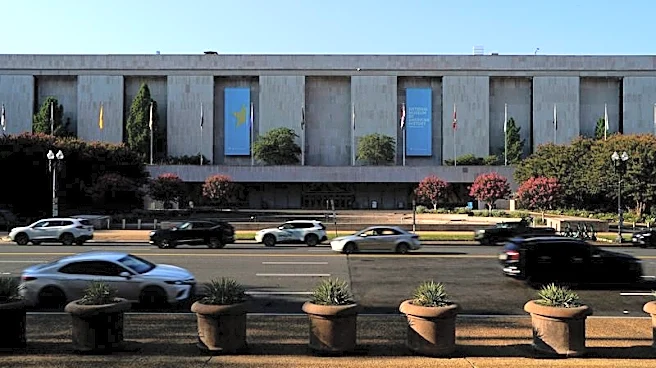
A 162-page report released by the White House's Domestic Policy Council criticizes the Smithsonian's National Museum of American History (NMAH) for not aligning with a 'proudly patriotic' vision. The report, published on July 4th, argues that the museum
has become an instrument of 'radical, activist ideology' by presenting a more inclusive view of history that incorporates the experiences of Indigenous and Black people, immigrants, and women. It claims that this approach has 'denigrated and displaced whites, males, Christians, and Americans.' The report also disputes the museum's portrayal of slavery, suggesting it should highlight how America's founders contributed to ending slavery, despite most of Europe abolishing it earlier. Additionally, the report criticizes the museum for not adequately acknowledging the role of Christianity in America's founding and for its portrayal of contemporary American culture, particularly regarding women, transgender people, and immigrants.
Why It's Important?
The report reflects ongoing cultural and political tensions in the U.S. regarding how history is presented and interpreted. It underscores a broader debate about national identity and the role of federally funded institutions in shaping public understanding of history. The White House's stance could influence future museum exhibits and educational content, potentially affecting how historical narratives are constructed and who gets to tell them. This could have significant implications for public policy and education, as well as for the Smithsonian's independence and its ability to present diverse perspectives. The report's criticisms may also impact funding and governance decisions at the Smithsonian, as the administration seeks to align cultural institutions with its vision.
What's Next?
The Smithsonian may face increased pressure to adjust its exhibits and programming to align with the administration's vision. The report could lead to changes in the museum's leadership or governance, especially as terms for board members expire. The administration might attempt to appoint loyalists to the Smithsonian's board of regents, influencing future decisions. The museum's response to the report and its ability to maintain its independence will be closely watched. Additionally, the upcoming reopening of the Smithsonian American Art Museum's renovated galleries will be a test of how the institution balances its educational mission with political pressures.