
What's Happening?
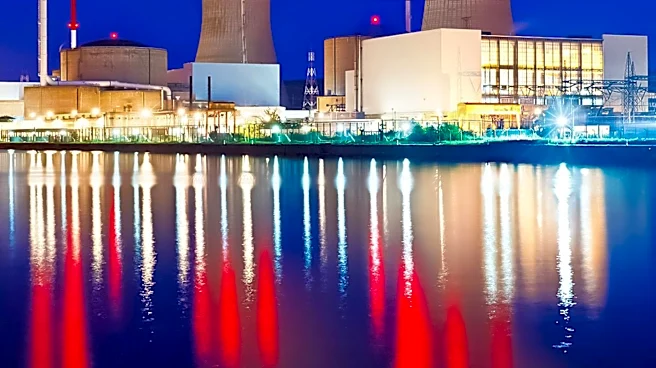
The Danube River's historically low water levels are threatening nuclear power operations in Romania and Hungary. Hungary's Paks nuclear power plant is operating at only 10% capacity due to insufficient
cooling water. In Romania, the military has intervened by demolishing a rock outcrop to improve water flow to the Cernavoda nuclear plant, which supplies a significant portion of the country's electricity. The ongoing drought and heatwave are exacerbating the situation, with little relief expected in the near future.
Why It's Important?
The situation underscores the critical role of water resources in energy production and the potential vulnerabilities of nuclear power plants to environmental changes. The reduced capacity of these plants could lead to energy shortages and increased electricity costs, affecting both consumers and industries. The crisis highlights the need for sustainable water management and the diversification of energy sources to mitigate the impacts of climate change on energy security.
What's Next?
Authorities in the affected countries are likely to continue implementing emergency measures to manage the crisis. This may include further reductions in industrial power consumption and increased reliance on alternative energy sources. The situation could also prompt a reassessment of energy policies and infrastructure investments to enhance resilience against future climate-related challenges. International cooperation may be necessary to address the broader implications of water shortages on energy security in the region.