







What's Happening?
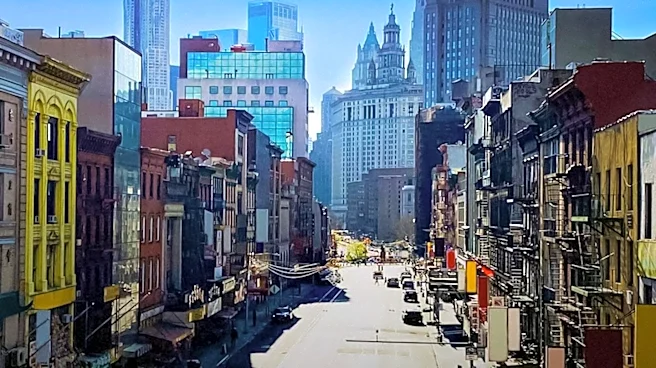
In Manhattan's Chinatown, a significant construction project is underway to replace the former Manhattan Detention Complex, known as the Tombs, with a new 16-story facility. This project, part of a broader initiative to close Rikers Island, involves building
four new detention centers across New York City. The new structure, designed by HOK, is set to be the tallest jail in the world upon its completion in 2032. The project has sparked controversy, with local nonprofit groups and arts organizations expressing concerns about its impact on the community, including potential displacement of small businesses and health issues among the elderly. Despite these concerns, the architects have highlighted the facility's modern design features, such as windowed cells and public art galleries, aimed at promoting dignity for detainees and visitors.
Why It's Important?
The construction of the 'jailscraper' in Chinatown is a pivotal part of New York City's plan to reform its correctional system by closing Rikers Island. This initiative reflects broader trends in urban development and criminal justice reform, aiming to create more humane detention facilities. However, the project has faced significant opposition due to its potential socio-economic impact on the Chinatown community. The displacement of businesses and health risks posed by prolonged construction are major concerns. This situation underscores the challenges cities face in balancing infrastructure development with community preservation and highlights the ongoing debate over the role of incarceration in society.
What's Next?
As construction progresses, community groups and activists are likely to continue their advocacy against the project, potentially influencing future city planning and policy decisions. The project's completion is scheduled for 2032, but ongoing public discourse may lead to modifications in its design or implementation. The city's response to these concerns could set precedents for how urban development projects are managed in culturally sensitive areas. Additionally, the success or failure of this initiative may impact future efforts to reform the criminal justice system in New York and beyond.
Beyond the Headlines
The 'jailscraper' project raises deeper questions about the future of urban spaces and the role of incarceration in society. It challenges the notion of what constitutes a humane detention facility and whether such structures can coexist with vibrant community life. The project also highlights the tension between modern architectural ambitions and the preservation of cultural heritage. As cities evolve, finding ways to integrate new developments without erasing historical and cultural identities remains a critical issue.