







What's Happening?
Billionaire entrepreneur Dan Gilbert and his wife Jennifer, through their foundation, have committed $10 million to a Detroit home-repair fund. This contribution is part of a larger $20 million initiative launched in May 2022, designed to assist over
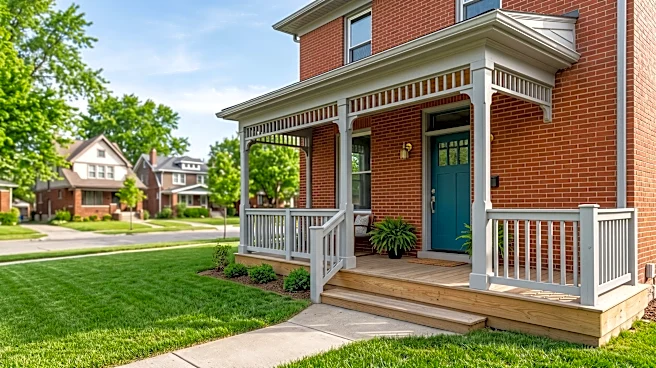
1,000 low-income residents in Detroit with essential home repairs over a three-year period. The fund aims to address critical structural issues such as roofs, foundations, stairs, windows, and drywall. Other significant contributors to the fund include ProMedica, which provided $8 million, and DTE Energy, which contributed $2 million. The initiative channels funds through national and local neighborhood groups to ensure direct support reaches the intended beneficiaries.
Why It's Important?
This initiative is crucial for Detroit, a city that has faced significant economic challenges and housing distress. The commitment from the Gilbert Family Foundation, alongside contributions from ProMedica and DTE Energy, provides much-needed financial aid to homeowners who might otherwise be unable to afford critical repairs. By focusing on structural integrity, the fund not only improves living conditions for over 1,000 low-income families but also helps stabilize property values in vulnerable neighborhoods. This type of private-sector investment in community infrastructure can foster economic revitalization, prevent further urban decay, and enhance the overall quality of life for Detroit residents, potentially inspiring similar philanthropic efforts in other U.S. cities facing housing crises.
What's Next?
Over the next three years, the Detroit Home Repair Fund will continue to allocate its $20 million to support home repairs for low-income residents. The program will focus on identifying and assisting eligible homeowners with critical structural needs. The success of this initiative could serve as a model for future public-private partnerships aimed at urban renewal and housing stability. Stakeholders, including the Gilbert Family Foundation, ProMedica, DTE Energy, and local community groups, will likely monitor the program's impact on housing conditions and resident well-being. Continued collaboration and potential expansion of such programs could further address the broader housing challenges in Detroit and other urban centers.
Beyond the Headlines
Beyond the immediate financial relief, this initiative highlights the growing trend of philanthropic engagement in addressing systemic urban issues. It underscores the understanding that stable housing is a fundamental component of community health and economic resilience. The focus on critical structural repairs suggests a long-term vision for sustainable community development, rather than temporary fixes. This effort could also influence public policy discussions around housing affordability and urban revitalization, potentially leading to more comprehensive strategies that combine private funding with government support to tackle widespread housing insecurity and improve the urban landscape.