





What's Happening?
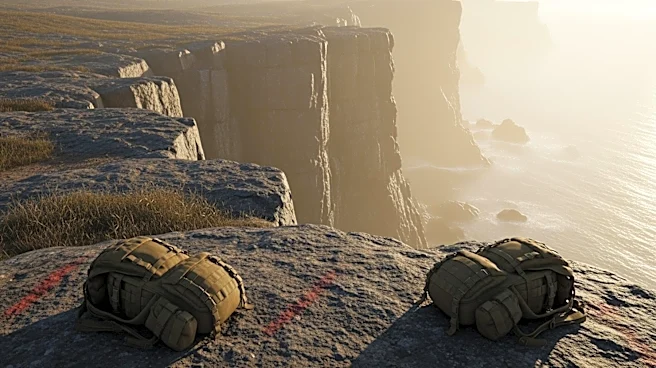
Two U.S. Army soldiers have gone missing in southwestern Morocco following their participation in the annual multinational military exercise known as African Lion. According to the United States Africa Command (AFRICOM), the soldiers were last seen near
ocean cliffs in the vicinity of the Cap Draa Training Area during a recreational hike after the day's exercises had concluded. The incident occurred on Saturday around 9 p.m., and a joint search and rescue operation involving U.S., Moroccan, and other participating countries' personnel has been launched. The search team is utilizing helicopters, ships, mountain rescue units, and divers to locate the missing soldiers. African Lion, which began in April and is scheduled to end in early May, is the largest U.S. annual joint military exercise on the African continent, involving over 7,000 personnel from more than 30 nations across four host countries, including Tunisia, Ghana, and Senegal.
Why It's Important?
The disappearance of the U.S. soldiers highlights the risks associated with military exercises, even during non-combat activities. African Lion serves as a critical platform for strengthening regional security cooperation and enhancing the readiness of participating forces for global crises. The incident underscores the importance of safety protocols and the challenges of conducting large-scale military operations in diverse and potentially hazardous environments. Morocco, a key ally of the United States in a region marked by political instability, plays a significant role in these exercises. The situation may impact U.S.-Morocco relations and the perception of U.S. military presence in the region, especially given the historical context of military incidents during such exercises.
What's Next?
The ongoing search and rescue operation will continue until the soldiers are found or further information is obtained. The incident is under investigation, and the outcome may lead to a review of safety measures and protocols for future exercises. The U.S. military and its allies will likely assess the situation to prevent similar occurrences. The broader implications for U.S. military strategy in Africa and its partnerships with regional allies may also be evaluated, particularly in light of recent political shifts in neighboring countries that have distanced themselves from Western powers.