







What's Happening?
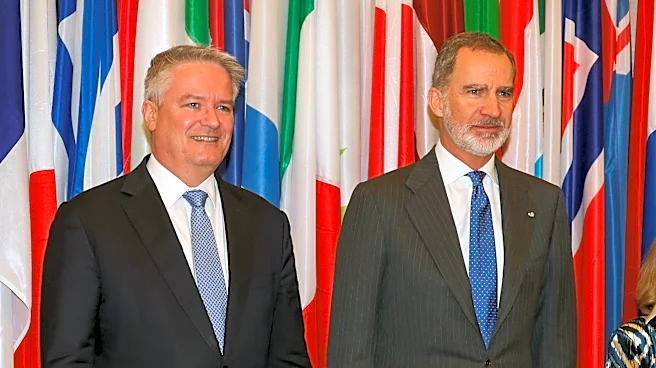
On November 18, 2026, King Felipe VI of Spain received the letters of credence from new ambassadors representing six different countries at the Royal Palace in Madrid. This traditional ceremony formally accredits the ambassadors as the highest diplomatic
authorities for their respective nations in Spain. The countries whose ambassadors presented their credentials were Malta, Honduras, Austria, Estonia, Germany, and Iraq. Among the ambassadors were Ana Paola Hall García of Honduras, Simon Pullicino of Malta, Peter Huber of Austria, Lembit Uibo of Estonia, Heiko Christoph Thoms of Germany, and Ali Shimran Hachem Albaay of Iraq. Following the presentation of credentials, King Felipe VI held individual meetings with each ambassador to discuss the state of bilateral relations. This ceremony, which dates back to the 18th century, marks a significant diplomatic event, likely the last of its kind for the year.
Why It's Important?
The reception of new ambassadors by King Felipe VI is a crucial diplomatic process that formally establishes and strengthens bilateral relations between Spain and the six represented nations. For the United States, while not directly involved, these diplomatic engagements contribute to the broader stability and interconnectedness of the international community. Strong diplomatic ties between European nations like Spain and countries in Central America, the Middle East, and other parts of Europe can indirectly impact U.S. foreign policy objectives, trade agreements, and security alliances. The formal accreditation of ambassadors ensures clear lines of communication and cooperation on various global issues, including trade, security, and cultural exchange. This process underscores the importance of traditional diplomacy in maintaining international order and fostering mutual understanding, which can have ripple effects on global partnerships and U.S. interests abroad.
What's Next?
Following the presentation of their letters of credence, the newly accredited ambassadors will officially commence their duties as their respective countries' chief diplomatic representatives in Spain. This will involve engaging in various diplomatic activities, including fostering bilateral trade, cultural exchange, and political cooperation. They will also represent their nations in official events and negotiations with the Spanish government. The individual meetings held with King Felipe VI are expected to lay the groundwork for future discussions and collaborations. These diplomatic channels will remain open for addressing any emerging issues or opportunities between Spain and the six nations. The continuity of these diplomatic relations is essential for maintaining stability and cooperation in a complex international landscape.
Beyond the Headlines
The ceremony of presenting letters of credence, while a formal protocol, carries significant symbolic weight in international relations. It signifies the mutual recognition of sovereignty and the commitment to peaceful and cooperative engagement between nations. Beyond the immediate political and economic implications, such events reinforce the established norms of international diplomacy that have evolved over centuries. The act of a monarch receiving ambassadors highlights the historical continuity of statecraft and the enduring role of symbolic leadership in international affairs. This tradition underscores the importance of formal channels in navigating global challenges and fostering a sense of shared responsibility among nations, contributing to a framework that indirectly supports broader international stability and cooperation.