








What's Happening?
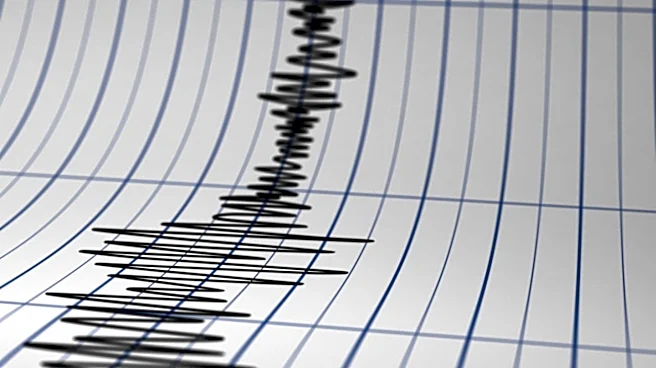
A magnitude 6 earthquake struck the northwest of Vanuatu, an island nation in the South Pacific Ocean, on Sunday. According to the United States Geological Service (USGS), the earthquake occurred at a depth of 10 kilometers on the seabed, with its epicenter
approximately 165 kilometers northwest of Port-Olry, located on the island of Espiritu Santo, the largest in the Vanuatu archipelago. No tsunami alerts were issued, and there have been no immediate reports of victims or material damage. The USGS impact assessment system assigned the earthquake to the green level, indicating a reduced probability of serious consequences. This event follows two earthquakes of magnitude 6.9 and 6.3 that shook the waters north of Vanuatu a week prior, which had prompted a tsunami alert for potential dangerous waves.
Why It's Important?
Vanuatu's location on the Pacific 'Ring of Fire' makes it highly susceptible to seismic activity, as it lies at the intersection of several tectonic plates. While this particular magnitude 6 earthquake did not trigger a tsunami or cause reported damage, the frequent seismic events underscore the constant threat faced by the island nation. The previous week's larger earthquakes and associated tsunami alert highlight the critical need for robust early warning systems and disaster preparedness in the region. The absence of immediate casualties or significant damage in this instance is a positive outcome, but it serves as a reminder of the ongoing geological instability and the importance of continuous monitoring and readiness for more severe events. The impact on local communities, even from moderate quakes, can be substantial, affecting infrastructure and livelihoods.
What's Next?
Given Vanuatu's position within the Pacific Ring of Fire, continued seismic activity is expected. Authorities, including the Vanuatu Department of Meteorology and Geohazards, will maintain vigilance and monitoring of seismic data. Residents are likely to remain on alert for potential aftershocks or future seismic events. The ongoing frequency of earthquakes in the region reinforces the necessity for robust building codes, public education on earthquake safety, and efficient emergency response plans. While no immediate actions are required following this specific event, the long-term strategy for Vanuatu will continue to involve strengthening its resilience against natural disasters, including improving infrastructure and communication systems to protect its population from future seismic and volcanic threats.
Beyond the Headlines
The recurring seismic activity in Vanuatu, a small island developing state, highlights the disproportionate impact of natural disasters on vulnerable nations. While larger economies might have the resources to quickly rebuild and implement advanced mitigation strategies, smaller nations often struggle with the long-term recovery and preparedness efforts. The 'green level' assessment by USGS, indicating a low probability of serious consequences, can sometimes mask the cumulative stress and disruption that frequent, even moderate, seismic events place on local communities and their economies. This situation underscores the broader global challenge of supporting disaster-prone regions in building sustainable resilience, which includes not only immediate response but also long-term development planning that accounts for geological realities and climate change impacts.