

What's Happening?
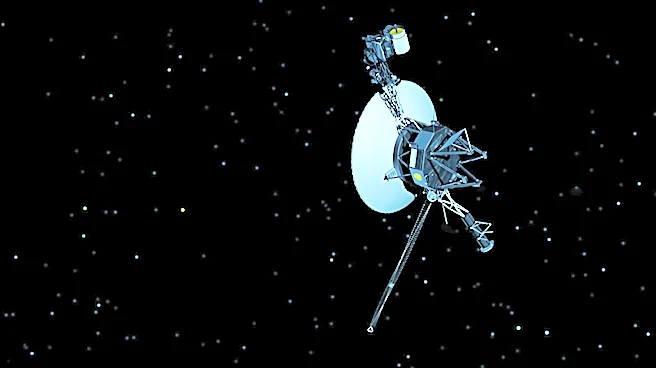
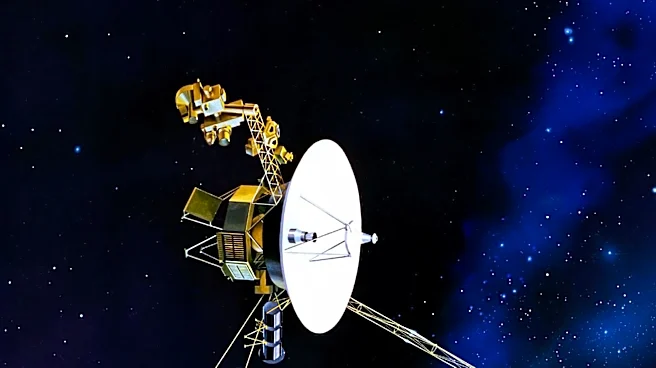
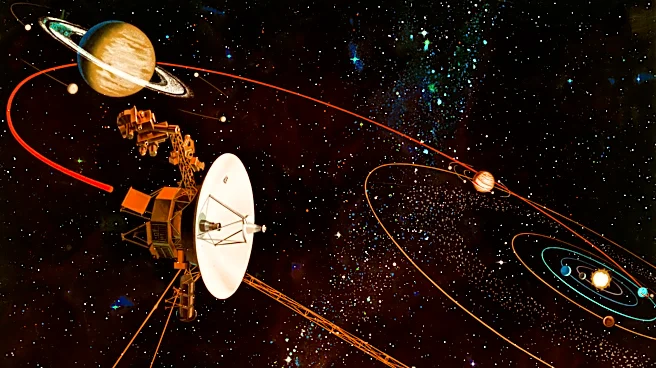
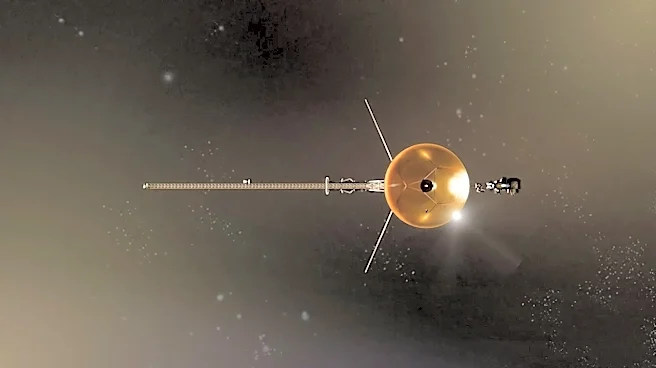
NASA's Voyager 1 spacecraft has reached a distance of one light-day from Earth, becoming the first human-made object to achieve this milestone. As of early Wednesday, the probe was approximately 16.1 billion miles (25.9 billion kilometers) from Earth, a distance light travels
in 24 hours. This means a radio command sent from NASA's Deep Space Network now takes a full day to reach the spacecraft, and its reply takes another day to return. While not a scientific milestone, this achievement is considered a significant engineering feat, highlighting the durability and design of the spacecraft and the Deep Space Network. The spacecraft, launched in 1977, continues to operate despite its aging systems, including a shrinking power supply and only two remaining functional science instruments. Voyager 1 recently experienced a two-day communication blackout before engineers reestablished contact.
Why It's Important?
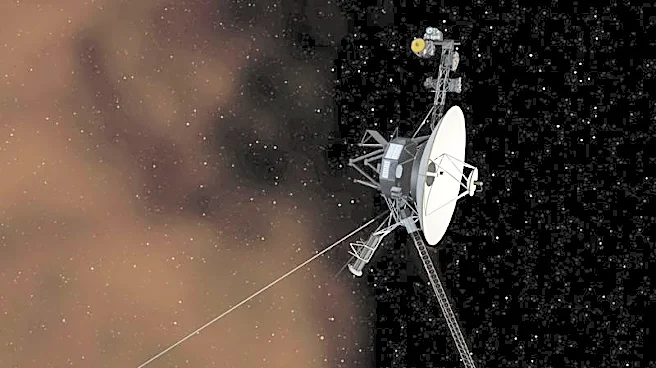
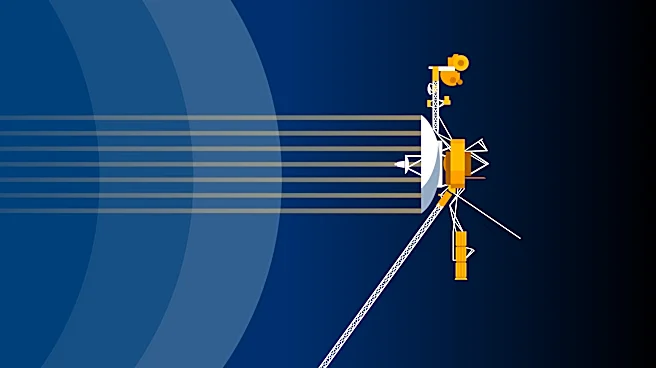
This milestone underscores the remarkable longevity and engineering prowess behind the Voyager mission, which has far exceeded its initial design life. The ability of Voyager 1 to continue transmitting data from such extreme distances provides invaluable insights into interstellar space, a region beyond the influence of our sun. The data collected by Voyager 1 offers the first direct measurements of the solar system's galactic neighborhood, challenging previous scientific predictions about the interstellar magnetic field. The mission's continued operation, despite power limitations and instrument shutdowns, demonstrates the resilience of space technology and the dedication of the engineering teams. It also serves as a testament to human ingenuity in exploring the farthest reaches of our solar system and beyond, providing a unique perspective on our place in the galaxy.
What's Next?
Voyager 1 is expected to continue communicating with Earth through the early 2030s, powered by its radioisotope thermoelectric generators, which are gradually losing output. Engineers are continuously managing the spacecraft's power resources, as demonstrated by recent operations to replace power-consuming devices with lower-power alternatives. Voyager 2, its twin, is trailing behind and is projected to reach one light-day from Earth in November 2035. The ongoing mission will continue to provide unique data from interstellar space, although with fewer operational instruments. The focus will remain on maintaining communication and extracting as much scientific data as possible from the aging probes as they journey further into the cosmos.
Beyond the Headlines
The Voyager mission represents more than just scientific exploration; it embodies humanity's enduring quest for knowledge and our capacity to project our presence into the vastness of space. The Golden Record carried aboard each Voyager spacecraft, containing sounds and images of Earth, serves as a time capsule and a message to any potential extraterrestrial intelligence, making the spacecraft a lasting legacy of human civilization. As Voyager 1 continues its journey, it will likely outlive humanity, carrying this message for billions of years. This aspect imbues the mission with profound philosophical implications, as the spacecraft becomes one of the last pieces of evidence that humans ever existed on Earth, long after our planet may cease to be. The mission's longevity challenges our perceptions of time and our place in the universe.