





What's Happening?
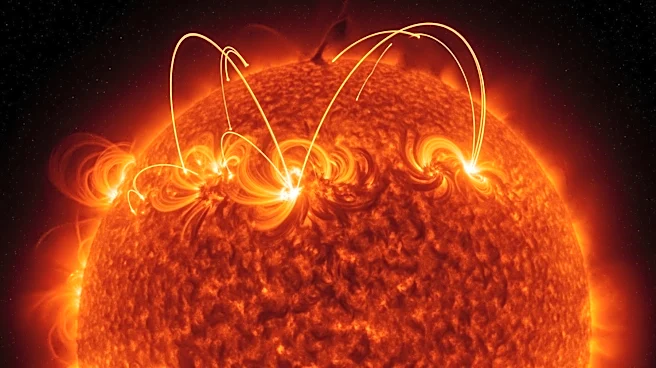
A rare solar flare from sunspot AR4392 was captured in real-time by an independent observer, providing a detailed look at the Sun's dynamic activity. The flare, recorded under optimal conditions, showcased bright plasma arcs expanding rapidly. Solar flares
occur when magnetic energy in the Sun's atmosphere is released, emitting radiation across the electromagnetic spectrum. This event highlights the growing role of amateur astronomers in complementing data from professional observatories like NASA's Solar Dynamics Observatory.
Why It's Important?
Solar flares can have significant impacts on Earth, including disruptions to satellite communications, GPS systems, and power grids. The detailed footage of this flare contributes to a better understanding of solar activity and helps refine predictive models. By combining amateur observations with professional datasets, scientists can improve forecasts of solar events, which is crucial for mitigating potential disruptions to technology and infrastructure.
What's Next?
The continued collaboration between amateur astronomers and professional scientists is expected to enhance the monitoring of solar activity. Future research will focus on understanding the conditions that lead to solar flares and their potential impacts on Earth. As solar observation technology advances, more detailed and frequent data will be available, aiding in the development of more accurate predictive models.