
What's Happening?
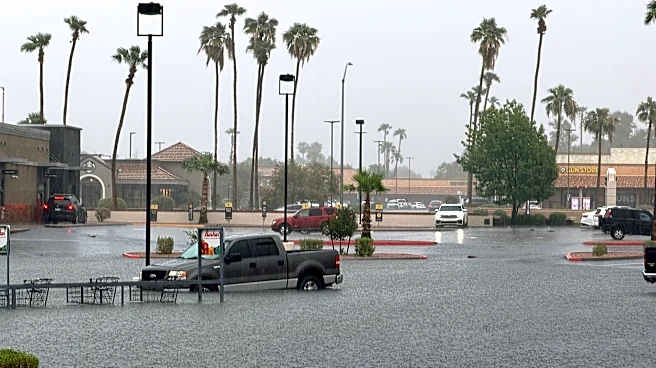
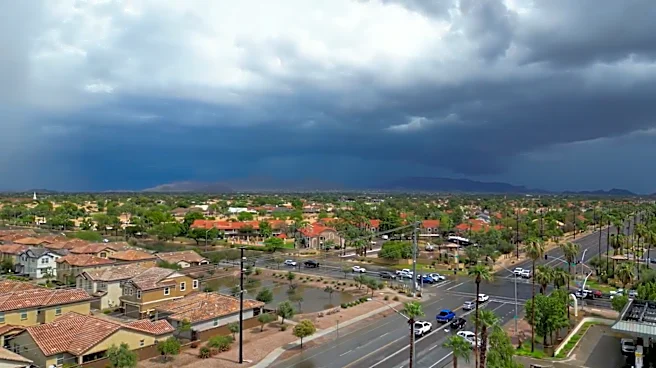
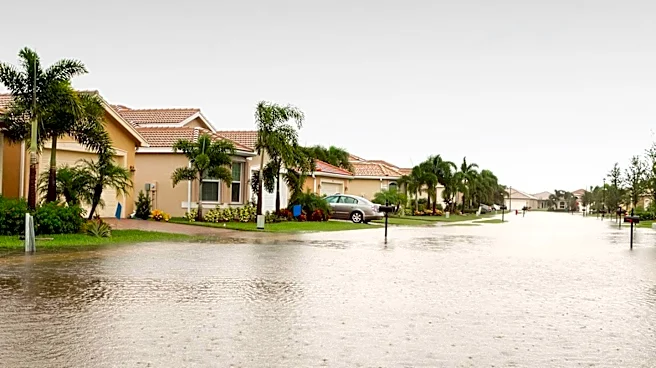
During recent monsoon storms that brought heavy rainfall to the Valley, a man was observed riding a jet ski through a flooded neighborhood in Mesa, Arizona. The incident occurred in an area near Ellsworth
Road and University Drive. While the storms caused significant rainfall across the region, leading to hazardous conditions, this individual chose an unconventional method to navigate the inundated streets. The act was captured on video, showcasing the extent of the flooding in the residential area. Authorities and news outlets have issued warnings against such activities, emphasizing the dangers of driving or engaging in recreational activities in floodwaters and advising residents to 'turn around, don't drown.'
Why It's Important?
This incident, while seemingly an isolated act of unusual recreation, highlights several important aspects of public safety and community response during extreme weather events. Firstly, it underscores the significant dangers associated with floodwaters, which can conceal hazards like open manholes, debris, and strong currents, making activities like jet skiing extremely risky. Secondly, it brings attention to the challenge of ensuring public compliance with safety warnings during natural disasters. Despite clear advisories to avoid flooded areas, some individuals may underestimate the risks or seek novel ways to interact with the unusual conditions. This can divert emergency resources and potentially endanger rescue personnel. The widespread sharing of such videos can also inadvertently normalize or encourage risky behavior, posing a broader public health concern during future flooding events.
What's Next?
In the immediate future, local authorities and emergency services will likely continue to reinforce public safety messages regarding floodwaters, emphasizing the 'turn around, don't drown' campaign. There may be increased efforts to patrol and secure flooded areas to prevent similar incidents and ensure public safety. Depending on the severity of the flooding and the potential for further monsoon activity, local officials might consider implementing stricter measures to deter risky behavior in inundated zones. Educational campaigns could be launched to better inform residents about the hidden dangers of floodwaters and the importance of adhering to official warnings. The incident may also prompt discussions on how to effectively communicate flood risks and encourage responsible behavior during extreme weather events.
Beyond the Headlines
Beyond the immediate spectacle, this event touches upon deeper societal and behavioral patterns during crises. It reflects a tension between individual freedom and collective safety, where personal choices can have broader implications for emergency response and public resources. The viral nature of such content on social media also raises questions about the role of digital platforms in shaping public perception and behavior during natural disasters. While some may view the act as harmless or even humorous, it inadvertently normalizes risky behavior, potentially influencing others to disregard safety warnings. This incident could serve as a case study for public safety officials to develop more effective communication strategies that not only inform but also persuade individuals to prioritize safety during hazardous conditions, fostering a culture of collective responsibility in the face of environmental challenges.