




What's Happening?
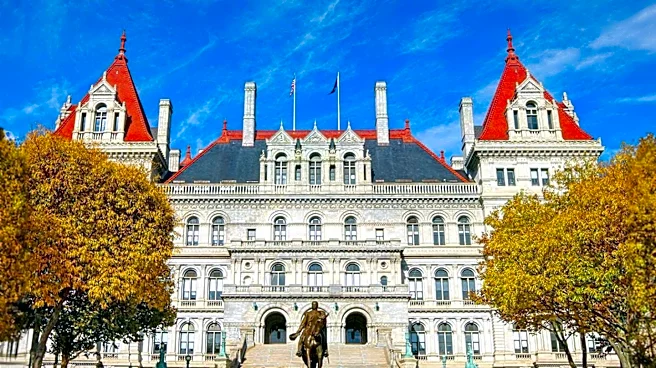
New York State Democrats have passed a bill aimed at preventing non-profit organizations from informing public sector workers about their right to opt out of union dues, a right established by the 2018 Supreme Court decision in Janus v. AFSCME. The Janus ruling
affirmed that mandatory union dues for public sector workers, when used for political purposes they disagree with, violate the First Amendment's protection against forced political speech. Following this decision, many workers opted out of paying dues, prompting unions to seek legislative measures to counter these efforts. The new New York bill, according to critics, uses the pretext of preventing "false impersonation of an employee organization" to allow the state attorney general to take action against groups like the Freedom Foundation and its 'Opt Out Today' campaign, which inform workers of their Janus rights. Critics argue there is no evidence these groups have engaged in fraudulent impersonation and that the bill is a thinly veiled attempt by unions to suppress free speech and maintain their revenue by keeping workers uninformed.
Why It's Important?
This legislative action in New York is significant because it directly challenges the free speech rights of organizations seeking to educate workers about their legal entitlements, as established by a Supreme Court precedent. The Janus v. AFSCME decision was a landmark ruling that empowered public sector employees nationwide to choose whether to financially support unions. By attempting to restrict the flow of information about these rights, the New York bill could undermine worker autonomy and the principles of free association. For unions, the ability to collect dues from all members, regardless of their political alignment, is crucial for their financial stability and political influence. Conversely, for workers' rights advocates and those who believe in limited government, this bill represents an overreach by unions and their political allies to stifle dissent and maintain power. The outcome of this legislative battle could influence similar efforts in other states and impact the balance of power between unions, workers, and government.
What's Next?
The immediate future will likely see legal challenges to the New York bill, as organizations like the Freedom Foundation are expected to argue that it infringes upon First Amendment rights. The bill's enforcement by the state attorney general, particularly Attorney General Letitia James, is anticipated to be a point of contention, with critics suggesting a partisan application of the law. The Wall Street Journal has already questioned the unions' motives, implying they fear what workers might learn about their rights. This situation could escalate into a significant legal and political battle over free speech, workers' rights, and union power in New York and potentially serve as a test case for similar legislation in other states. The debate will continue to highlight the tension between collective bargaining rights and individual liberties, particularly in the context of public sector employment.
Beyond the Headlines
This issue extends beyond the immediate legal and political implications, touching upon fundamental questions about the nature of unionism and individual liberty. The historical context, including President Franklin D. Roosevelt's opposition to public sector unionism, adds another layer to the debate, suggesting that concerns about the political power of such unions are not new. The bill's attempt to control information flow raises ethical questions about transparency and the right of individuals to be fully informed about their choices, especially when those choices involve financial obligations and political affiliations. This situation also reflects a broader trend of political polarization, where legislative actions are often seen through the lens of partisan advantage rather than neutral governance. The long-term impact could be a re-evaluation of the balance between union power, worker rights, and the constitutional protections of free speech and association in the United States.