



What's Happening?
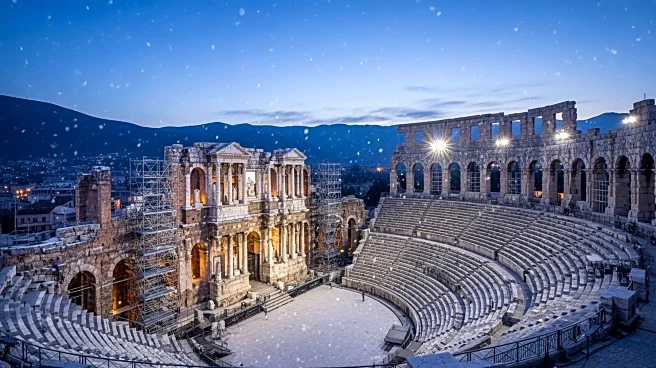
The ancient Roman Arena in Verona, Italy, is receiving a significant modernization to improve accessibility and safety in preparation for the 2026 Milan Cortina Winter Olympic Games. The arena, which dates back to the 1st Century, will host the Olympic closing
ceremony and the Paralympic opening ceremony. The renovation project, costing approximately 18 million euros, aims to make the arena more accessible to people with disabilities and improve safety features. This includes the construction of wheelchair-accessible ramps and the installation of new handrails and safety barriers. The project is overseen by Simico, the government agency responsible for Olympic infrastructure, and involves collaboration with preservation officials to ensure the changes harmonize with the historical structure.
Why It's Important?
The renovation of the Verona Arena is significant as it highlights the ongoing efforts to make historical sites more accessible and safe for all visitors, including those with disabilities. This project not only preserves a cultural landmark but also aligns with modern accessibility standards, setting a precedent for similar initiatives worldwide. The improvements will benefit the local community and tourists, enhancing the arena's role as a venue for major events beyond the Olympics. Additionally, the project reflects a broader commitment to inclusivity in international sporting events, ensuring that venues accommodate athletes and spectators with diverse needs.
What's Next?
Following the completion of the renovations, the Verona Arena will host the Olympic closing ceremony on February 22, 2026, and the Paralympic opening ceremony on March 6, 2026. The project will continue beyond the Olympics, with plans to install an elevator to improve access to the arena's upper levels. The local organizing committee is also considering retaining some of the temporary structures as permanent features to benefit future events. The success of this project may influence similar upgrades at other historical sites, promoting accessibility and safety in cultural heritage preservation.