





What's Happening?
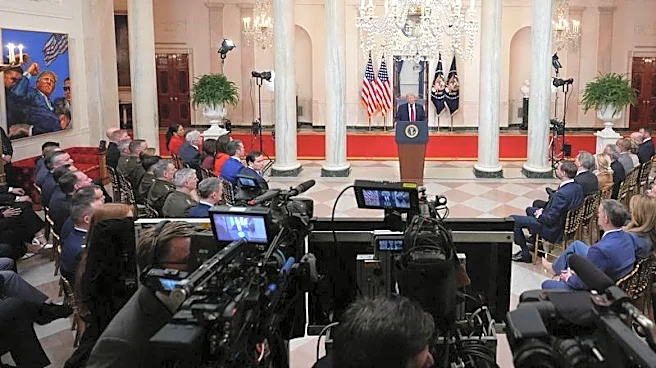
The National Oceanic and Atmospheric Administration (NOAA) has lifted a longstanding ban on commercial fishing within the Northeast Canyons and Seamounts Marine National Monument. This decision follows a proclamation signed by President Trump in February,
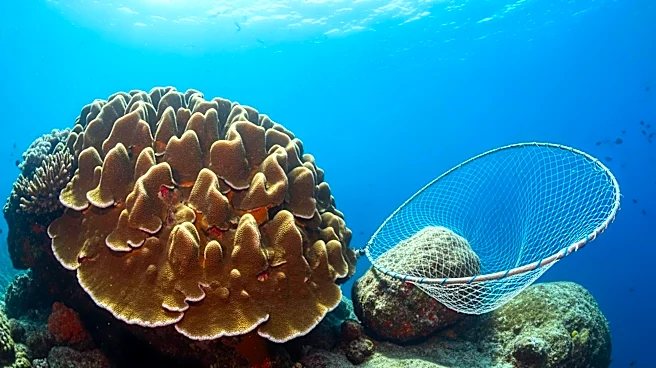
aimed at bolstering the American fishing industry. The monument, covering approximately 4,900 square miles, is home to valuable species such as red crab, mackerel, and swordfish. While the ban is lifted, certain restrictions remain in place to protect deep-sea corals, in line with the New England Fishery Management Council’s Deep-Sea Coral Amendment. Commerce Secretary Howard Lutnick emphasized the importance of this move for American fishermen, signaling their value in the United States. This regulatory relief is the second in recent months, following a similar decision by the Western Pacific Regional Fishery Management Council to reopen areas of four Pacific Ocean national monuments to commercial fishing.
Why It's Important?
The reopening of the Northeast Canyons and Seamounts Marine National Monument to commercial fishing is significant for the U.S. fishing industry, potentially boosting economic conditions for fishermen by allowing access to high-value species. This move aligns with President Trump's promise to support the fishing industry, reflecting a broader policy shift towards deregulation in maritime sectors. The decision may lead to increased fishing activity and economic benefits for coastal communities reliant on fishing. However, it also raises concerns about the environmental impact on deep-sea coral habitats, necessitating careful management to balance economic interests with conservation efforts.
What's Next?
The continuation of fishing activities in the reopened monument areas will likely be closely monitored by NOAA to ensure compliance with remaining restrictions designed to protect coral habitats. Stakeholders, including environmental groups and fishing companies, may engage in discussions to address potential ecological impacts and explore sustainable fishing practices. Further regulatory adjustments could be considered based on the outcomes of these activities, potentially influencing future policy decisions regarding marine conservation and commercial fishing.