
What's Happening?
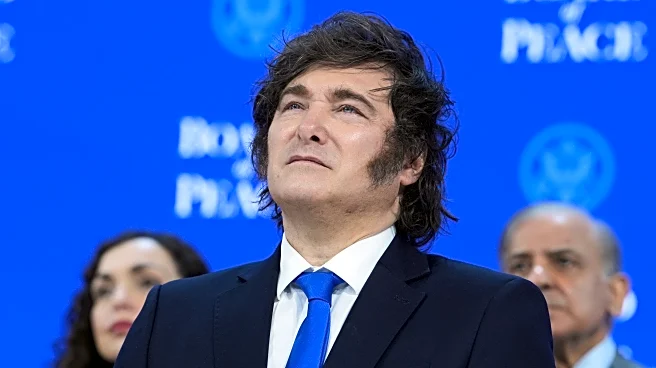
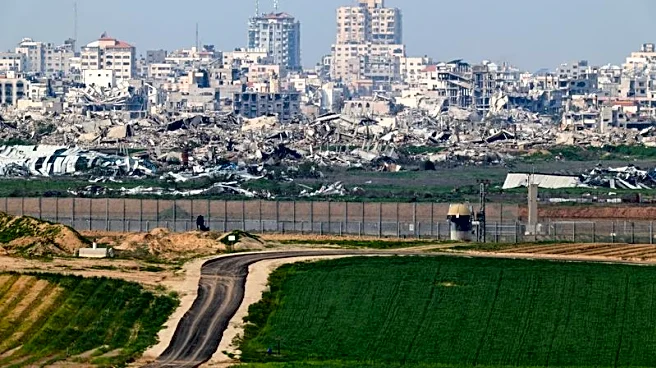
President Trump has announced the formation of the Gaza Board of Peace, intended to oversee the reconstruction of the Gaza Strip. However, the board's charter suggests a broader mandate, leading to cautious
reactions from potential member countries. Invitations have been extended to nations including Argentina, Canada, and Israel, but many leaders are hesitant to publicly endorse the initiative. The board's draft charter indicates ambitions beyond Gaza, aiming to establish a U.S.-led alternative to the United Nations for global conflict resolution. This has raised concerns among international leaders about the board's true objectives and its potential to undermine existing international frameworks.
Why It's Important?
The establishment of the Board of Peace could significantly impact international diplomacy and conflict resolution strategies. By potentially positioning itself as an alternative to the United Nations, the board may alter the dynamics of international cooperation and peacekeeping. Countries that choose to participate could gain influence in shaping global peace efforts, while those that abstain might risk diplomatic tensions with the U.S. The board's broad mandate and the power vested in its chairman, President Trump, could lead to unilateral decision-making, affecting global stability and the balance of power in international relations.
What's Next?
The U.S. is expected to announce the official list of board members soon, with further details likely to emerge during President Trump's visit to the World Economic Forum in Davos. The board's formation and its potential implications will be closely monitored by international leaders, who may seek to negotiate terms or propose alternative frameworks. The reaction from key stakeholders, including the United Nations and countries with vested interests in Gaza, will be crucial in determining the board's future role and effectiveness in global peace efforts.