

What's Happening?
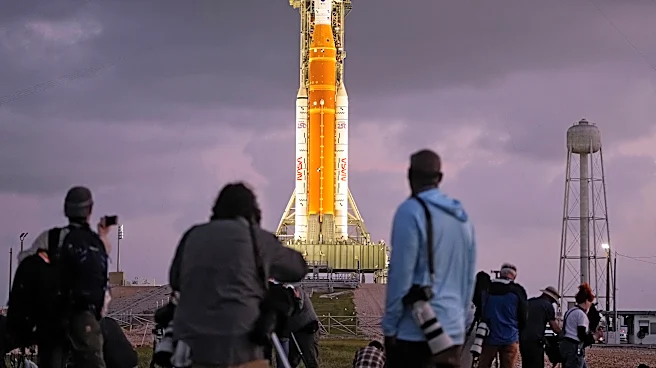
NASA's Artemis II mission has successfully completed a critical step in its journey to the Moon. The mission management team gave the 'Go' for the translunar injection burn, which propels the Orion spacecraft towards the Moon. This marks the first time
humans are being sent around the Moon since the Apollo 17 mission in 1972. The spacecraft's main engine, capable of producing up to 6,000 pounds of thrust, was ignited for five minutes and 49 seconds to achieve this maneuver. The crew, consisting of NASA astronauts Reid Wiseman, Victor Glover, Christina Koch, and Canadian Space Agency astronaut Jeremy Hansen, began their day with a wake-up call from mission control and proceeded with their first full day of activities in space, including exercise sessions to maintain fitness during the mission.
Why It's Important?
The successful execution of the translunar injection burn is a significant milestone for NASA's Artemis program, which aims to return humans to the Moon and eventually establish a sustainable presence there. This mission not only demonstrates the capabilities of the Orion spacecraft but also sets the stage for future lunar exploration and potential Mars missions. The involvement of international partners, such as the Canadian Space Agency, highlights the collaborative nature of modern space exploration. The mission's success could bolster public and governmental support for continued investment in space exploration, potentially leading to advancements in technology and science.
What's Next?
Following the successful translunar injection burn, the Artemis II crew will continue their journey towards the Moon, conducting various scientific and technical activities. The mission will provide valuable data on the spacecraft's performance and the crew's health and well-being in space, which will inform future missions. NASA will continue to provide live updates and imagery from the mission, engaging the public and maintaining interest in space exploration. The success of Artemis II will pave the way for Artemis III, which aims to land astronauts on the lunar surface.