
What's Happening?
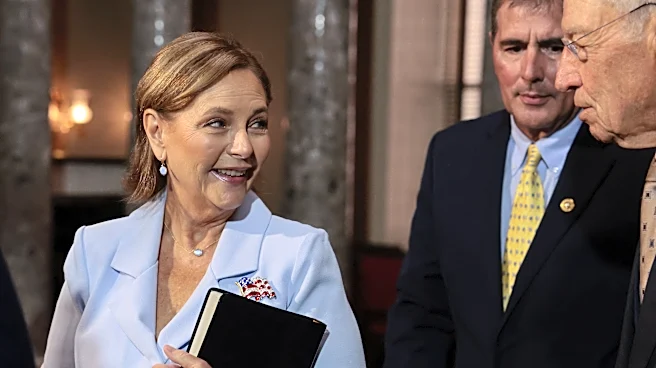
During a recent debate, Senator Darline Graham, who was appointed to fill the Senate seat previously held by her late brother Lindsey Graham, publicly stated that she is 'not that informed on national
security.' This admission occurred when she was questioned about whether Taiwan and the South China Sea constitute national security concerns for the United States. Senator Graham clarified that national security is 'not my thing' and 'not my area of expertise,' though she affirmed her support for the military. This candid statement has drawn considerable attention and criticism, notably from former South Carolina Governor Nikki Haley, who highlighted the stark contrast with the extensive national security knowledge possessed by Senator Graham's brother. The debate performance and her acknowledged gaps in this critical area are now being discussed as factors that could influence undecided voters.
Why It's Important?
Senator Graham's admission is significant because national security is a paramount responsibility for members of the U.S. Senate, particularly given the complex geopolitical landscape involving regions like Taiwan and the South China Sea. These areas are central to U.S. foreign policy, economic interests, and strategic alliances. A senator's understanding of these issues directly impacts their ability to contribute to legislative decisions on defense spending, international treaties, and foreign aid. Her statement could raise concerns among constituents and political observers about her preparedness to address critical global challenges and represent U.S. interests effectively on the international stage. The comparison drawn by Nikki Haley to her brother, a known figure in national security discussions, further underscores the perceived gap in expertise, potentially affecting public confidence in her capacity to serve in a role that demands a comprehensive grasp of such matters.
What's Next?
Following Senator Graham's debate performance, it is likely that her stance and knowledge on national security will remain a focal point of scrutiny, particularly as the election cycle progresses. Opponents and political commentators may continue to highlight her admission to question her suitability for the Senate. She may face increased pressure to demonstrate a deeper understanding of foreign policy and defense issues, possibly through public statements, policy proposals, or engagements with national security experts. Undecided voters, as suggested by the 'Meet the Press NOW' panel, may pause to consider this aspect of her candidacy. Her campaign will need to address these concerns, either by emphasizing other areas of her expertise or by outlining a clear plan to bolster her knowledge in national security to reassure the electorate.
Beyond the Headlines
Senator Graham's candid admission touches upon broader implications regarding the qualifications and expectations for public office, especially in a body like the U.S. Senate. It raises questions about the balance between specialized expertise and general representation, and how voters weigh these factors. In an era where political figures are often expected to be well-versed in a multitude of complex issues, her statement challenges the notion of comprehensive knowledge across all domains. This event could also spark a wider discussion about the role of appointed officials versus elected ones, and the process by which individuals are prepared for high-stakes legislative positions. Furthermore, it highlights the ongoing political dynamics within South Carolina, particularly the influence of established political legacies and the challenges faced by new entrants in living up to those expectations.