

What's Happening?
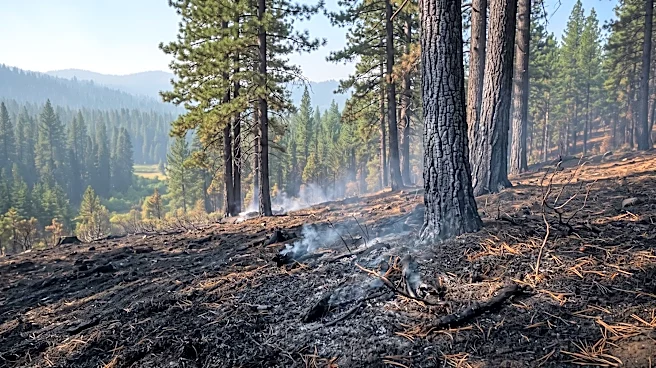
The U.S. Forest Service successfully contained four wildfires that ignited in the Plumas National Forest, California, following a series of thunderstorms. These fires, which occurred on Tuesday, were attributed to a combination of lightning strikes, dry
fuels, and light rainfall. Three of the fires were located in the Bucks Lake area, with another near Oro-Quincy Highway and French Creek Road. None of these incidents expanded beyond a quarter-acre before being brought under control. Despite the containment, the region continues to face a high risk of fire due to persistent high temperatures and exceptionally dry forest fuels. Plumas National Forest Fire Chief Martin Senter noted that while late spring and early summer lightning often coincides with conditions less conducive to rapid fire spread, late summer and fall lightning on dry fuels can quickly escalate into large wildfires, posing threats to communities and infrastructure. A Heat Advisory is currently in effect for certain areas of the Plumas National Forest, including the Feather River Canyon and Middle Fork Feather River, until Friday at 10 p.m.
Why It's Important?
The containment of these wildfires highlights the ongoing and significant threat posed by natural phenomena like lightning in conjunction with environmental conditions such as dry fuels and high temperatures in California. The U.S. Forest Service's rapid response is crucial in preventing small ignitions from escalating into larger, more destructive blazes that can devastate natural resources, endanger communities, and strain emergency services. The continued high fire danger, exacerbated by 'extremely' dry forest fuels described as being 'more like August than October,' underscores the extended and intensified wildfire season that has become a recurring challenge for the state. This situation necessitates constant vigilance and resource allocation for fire prevention and suppression efforts, impacting local economies through potential evacuations, property damage, and disruptions to tourism and outdoor recreation. The presence of a Heat Advisory further complicates the situation, increasing the risk of new ignitions and making firefighting efforts more challenging for personnel.
What's Next?
With a Heat Advisory in effect through Friday evening for parts of the Plumas National Forest, the immediate focus will remain on monitoring weather conditions and potential new ignitions. Firefighting agencies will likely maintain heightened alert levels and continue to deploy resources for rapid response to any new outbreaks. Residents and visitors in the affected areas are expected to adhere to any local advisories or restrictions related to fire safety. The U.S. Forest Service will likely continue to emphasize public education on fire prevention, especially concerning activities that could spark fires in dry conditions. Long-term strategies will involve ongoing forest management practices aimed at reducing fuel loads and increasing forest resilience to wildfires, particularly as climate patterns contribute to hotter and drier conditions in the region. The experience from these contained fires will also inform future preparedness plans for lightning-sparked incidents.
Beyond the Headlines
The recurring pattern of lightning-sparked wildfires in California, even with light rain, points to a deeper ecological shift where natural weather phenomena are interacting with increasingly vulnerable landscapes. The 'extremely' dry forest fuels, atypical for October, suggest a prolonged drying trend that extends the traditional fire season and increases the intensity of potential fires. This situation raises questions about the long-term sustainability of current forest management practices and the need for adaptive strategies that account for a changing climate. The economic and social implications extend beyond immediate fire damage, affecting air quality, public health, and the psychological well-being of communities living under constant threat of wildfire. It also highlights the critical role of federal agencies like the U.S. Forest Service in protecting vast natural areas and the complex interplay between natural events, human activity, and environmental policy in managing these risks.