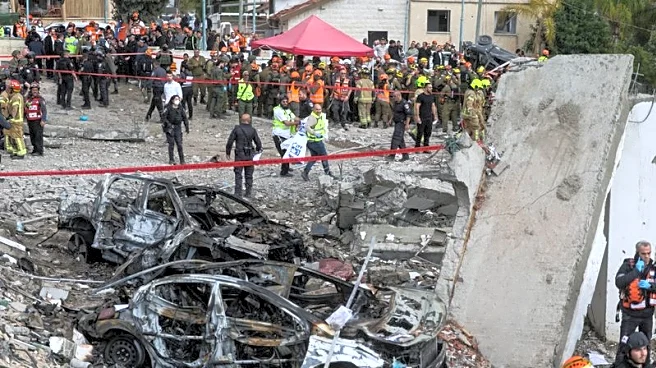




What's Happening?
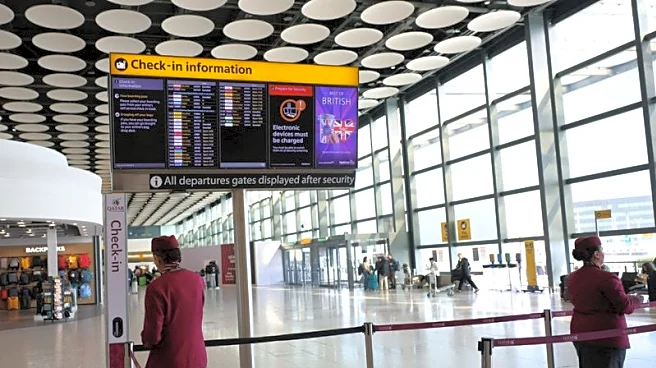
The United States has begun evacuating diplomats and shutting down some embassies in the Middle East as the conflict in the region enters its fourth day. The State Department has issued a directive for Americans to leave several countries, including Bahrain,
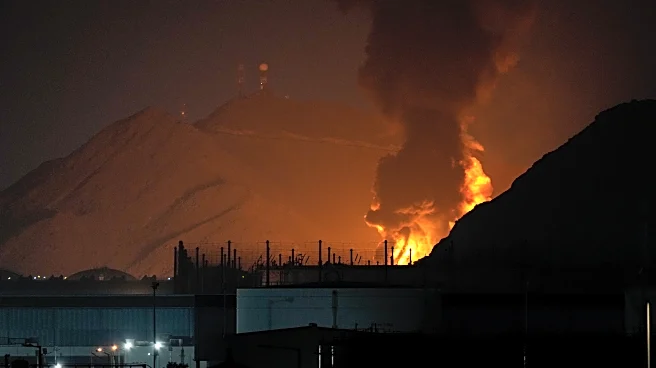
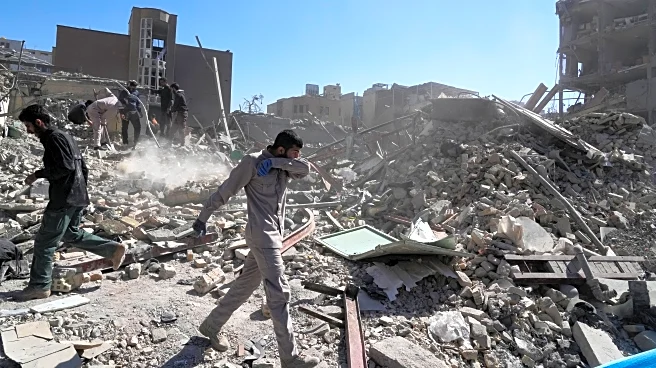
Egypt, Iran, and others, due to escalating safety risks. This decision follows attacks on U.S. embassies, including drone strikes on the U.S. Embassy in Saudi Arabia and a fire near the U.S. Consulate in Dubai. The conflict has seen U.S. and Israeli forces conducting strikes in Iran, with significant casualties reported. The situation has led to increased tensions and instability across the region.
Why It's Important?
The evacuation of U.S. diplomats and closure of embassies highlight the severity of the conflict and its potential to disrupt diplomatic relations and international stability. The U.S. response underscores the risks to American personnel and interests in the region, prompting a reevaluation of diplomatic strategies. The conflict's impact on global energy markets, particularly with Iran's threats to close the Strait of Hormuz, could lead to significant economic repercussions. The situation also poses challenges for international diplomacy, as countries navigate the complexities of regional alliances and security concerns.
What's Next?
The U.S. will likely continue to monitor the situation closely, with potential further evacuations and diplomatic actions depending on the conflict's progression. International stakeholders may engage in diplomatic efforts to de-escalate tensions and seek resolutions to the conflict. The U.S. military presence in the region may increase to protect American interests and ensure the safety of remaining personnel. The situation's evolution will be critical in determining the broader geopolitical and economic impacts.