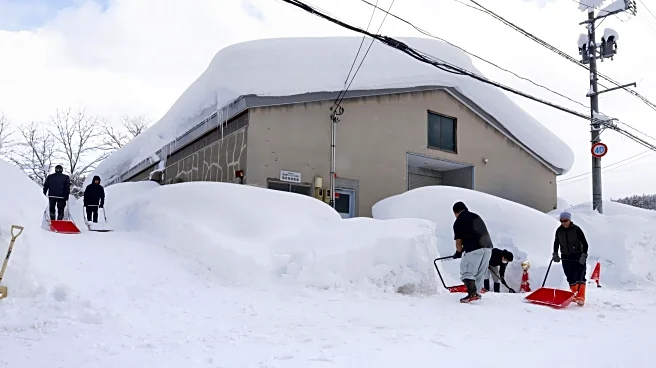

What's Happening?
Japan's Meteorological Agency issued a tsunami advisory after a 6.7-magnitude earthquake struck off the coast of Aomori prefecture in northeastern Japan. The quake occurred at a depth of about 12 miles
and prompted warnings of potential tsunamis up to 3 feet along the Pacific coast of Hokkaido, Aomori, Iwate, and Miyagi prefectures. This event follows a 7.5-magnitude earthquake earlier in the week that injured at least 34 people and caused a tsunami in the region. Authorities have warned of possible aftershocks and a slight increase in the risk of a magnitude-8-level quake.
Why It's Important?
The recent seismic activity in Japan underscores the country's vulnerability to natural disasters, particularly earthquakes and tsunamis. The advisory serves as a reminder of the importance of emergency preparedness in regions prone to such events. The potential for significant damage and loss of life necessitates robust disaster response strategies and infrastructure resilience. The situation also highlights the ongoing need for international cooperation in disaster management and the sharing of best practices to mitigate the impact of natural disasters.
What's Next?
Authorities in Japan are closely monitoring the situation and have urged residents in affected areas to remain vigilant and prepared for potential aftershocks. The government is likely to review and possibly enhance its disaster preparedness and response measures. International observers and neighboring countries may also offer support and share expertise in managing the aftermath of such natural events. Continued monitoring and communication will be essential to ensure public safety and minimize disruption.