




What's Happening?
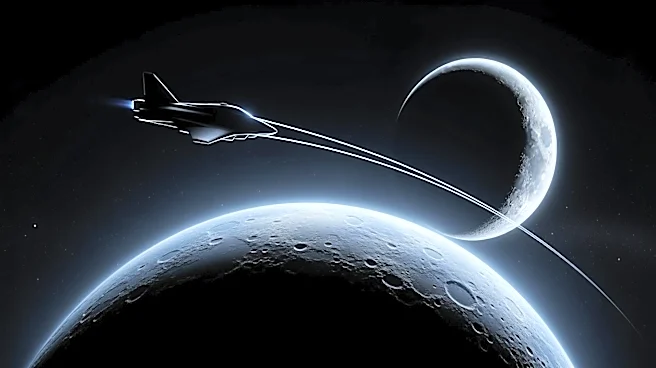
NASA's Artemis II mission has reached a new milestone by setting a record for the farthest distance traveled from Earth by a human mission. The crew, aboard the Orion spacecraft, reached 252,756 miles from Earth, surpassing the Apollo 13 record. During
the mission, the crew conducted lunar observations and studied the solar corona during a solar eclipse. The mission aims to gather data on lunar features and potential hazards for future missions.
Why It's Important?
The Artemis II mission is a critical step in NASA's efforts to return humans to the Moon and eventually to Mars. By testing the capabilities of the Orion spacecraft and gathering valuable scientific data, the mission lays the groundwork for future lunar exploration. The success of Artemis II demonstrates the progress in human spaceflight and the potential for further exploration of the solar system.
What's Next?
Following the successful lunar flyby, the Artemis II crew will begin their return journey to Earth. The data collected during the mission will be analyzed to inform future Artemis missions, including the planned Artemis III mission, which aims to land humans on the lunar surface. Continued advancements in space technology and international collaboration will be essential for the success of these future missions.