







What's Happening?
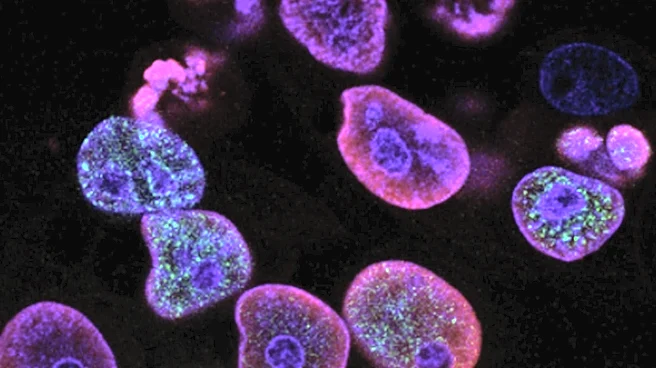
Researchers at the Massachusetts Institute of Technology have developed an experimental adjuvant that could enhance mucosal immunity when used with injectable polio vaccines. The adjuvant, Am80, is delivered using lipid nanoparticles, allowing for a slow
release that stimulates immune cells to target the mucosal lining of the intestine. This approach aims to provide the benefits of the oral polio vaccine, which induces mucosal immunity, without its associated risks. Initial tests in rats have shown promising results, with increased production of antibodies necessary for mucosal immunity.
Why It's Important?
This development could significantly impact global polio eradication efforts by addressing a key limitation of the injectable polio vaccine, which does not prevent virus transmission as effectively as the oral version. By enhancing mucosal immunity, the new adjuvant could reduce virus shedding and transmission, crucial for controlling outbreaks. This innovation represents a potential breakthrough in vaccine technology, offering a safer alternative to the oral vaccine and supporting public health initiatives worldwide.
What's Next?
The next phase involves testing the improved vaccine in larger animal models to confirm its efficacy and safety. If successful, this approach could be adapted for other vaccines targeting pathogens that infect mucosal surfaces, such as those affecting the lungs or reproductive tract. The research team plans to explore these possibilities, potentially broadening the impact of their findings on vaccine development and infectious disease control.