





What's Happening?
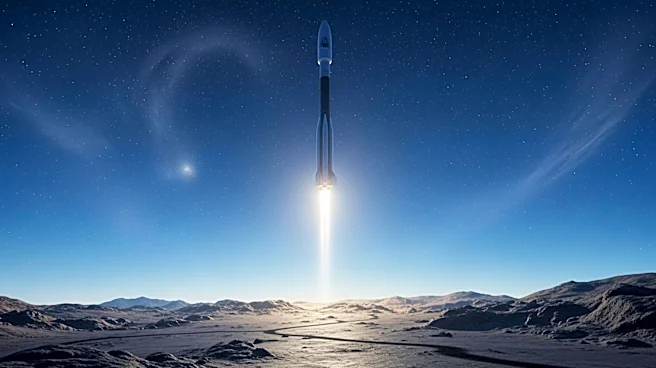
SpaceX conducted the first launch of its third-generation Starship system, achieving a successful lift-off but encountering mixed results during the mission. The launch took place from SpaceX's new pad in South Texas, with the Super Heavy booster lifting
off successfully. However, one of the 33 Raptor 3 engines shut down prematurely, and the booster failed to execute a controlled sea landing, crashing into the Gulf of Mexico. The spacecraft continued its mission, deploying 20 dummy satellites and two additional satellites to test heat shield tiles. Despite an engine malfunction, the spacecraft managed to reach its intended velocity and reentered the atmosphere over the Indian Ocean. It performed a soft-landing simulation before tipping over and exploding, likely due to excess fuel. NASA chief Jared Isaacman congratulated SpaceX on the launch, highlighting its significance in advancing towards lunar and Martian missions.
Why It's Important?
The launch represents a significant step in SpaceX's efforts to develop a reusable spacecraft capable of supporting missions to the Moon and Mars. The successful deployment of test satellites and the spacecraft's ability to withstand reentry stresses demonstrate progress in the Starship program. However, the engine and landing issues highlight ongoing challenges in achieving full mission success. The competition with Blue Origin's 'Blue Moon' for NASA's Artemis program underscores the importance of resolving these technical hurdles. The outcome of this launch could influence future funding and support for SpaceX's lunar and interplanetary ambitions, impacting the broader space exploration industry.
What's Next?
SpaceX is expected to conduct further test flights to address the issues encountered during this launch. The company will likely focus on improving the reliability of the Raptor 3 engines and refining the booster landing maneuvers. Future launches may continue to attempt sea landings before progressing to catch landings on the launch tower. As SpaceX competes with Blue Origin for NASA contracts, demonstrating consistent success in these areas will be crucial. The next steps include an uncrewed docking mission with NASA's Orion spacecraft and subsequent lunar landings, with a crewed mission planned by the end of 2028.