
What's Happening?
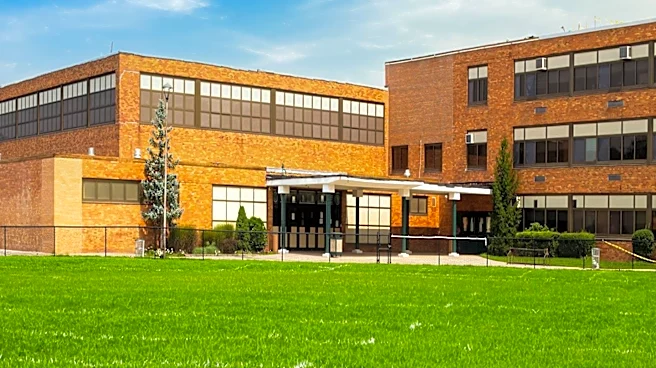
The Olathe Public Schools Board of Education has unanimously voted to close six schools by the end of the 2026-27 school year. The affected schools include Black Bob, Heritage, Scarborough, Tomahawk, and
Walnut Grove elementary schools, along with Indian Trail Middle School. This decision follows an extensive review process that considered facilities, enrollment projections, and community engagement. The district cited budget strain, declining birth rates, and a decrease in student enrollment as primary reasons for the closures. Superintendent Brent Yeager and Board President Julie Steele described the decision as somber, acknowledging the personal impact on families. Approximately 2,000 students are expected to be affected by these closures. The district has also highlighted ongoing underfunding from the state, particularly in special education, as a contributing factor to its financial difficulties. A task force and steering committee analyzed about 40 criteria, including maintenance costs and school density, to arrive at this decision. The six schools will continue to operate normally until their scheduled closure.
Why It's Important?
This decision by the Olathe Public Schools Board underscores the significant challenges faced by educational institutions across the U.S., particularly those grappling with declining enrollment and financial constraints. The closure of six schools will directly impact thousands of students and their families, necessitating adjustments in transportation, social networks, and academic environments. For the Olathe community, this move reflects broader demographic shifts, such as declining birth rates and housing prices that make it difficult for young families to move into the district. The district's emphasis on state underfunding, especially in special education, highlights a critical issue in public education funding that could have ripple effects on other districts. The situation also brings to light the complex interplay between local school boards, state legislatures, and community interests in managing public resources. The potential sale of school properties, with the state legislature holding a right of first refusal, adds another layer of complexity, impacting local zoning and community development.
What's Next?
The immediate next steps for Olathe Public Schools involve developing new attendance boundaries for the remaining schools. Community meetings are scheduled from mid-October to mid-November to gather feedback on these boundary changes, with the goal of finalizing new boundaries by January 2027. This timeline is intended to provide families and staff ample time to prepare for the 2027-28 school year. Transition teams, comprising principals, staff, and parents, will be established to support students and staff through this period of change. The district has also issued a request for proposals for brokerage services to manage the potential sale of the six closing school buildings. Concurrently, a petition drive, initiated by 'Olathe Families United,' is underway to trigger a state review of the closures, requiring 6,100 valid signatures from registered voters. If the district proceeds despite state advice, the group plans to demand transparency and accountability.
Beyond the Headlines
The closure of multiple schools in Olathe extends beyond immediate logistical challenges, touching upon deeper societal and ethical considerations. The emotional toll on families, particularly those facing financial and social challenges, is significant, raising questions about equitable access to education and community stability. The district's commitment to protecting classroom resources despite financial difficulties highlights the ongoing struggle to balance fiscal responsibility with educational quality. The involvement of community groups in challenging the decision and advocating for a state review underscores the importance of local governance and citizen participation in educational policy. Furthermore, the potential repurposing of school properties could lead to debates about urban planning, community needs, and the preservation of public assets. This situation could serve as a precedent for other districts facing similar demographic and financial pressures, prompting a broader reevaluation of state funding models and community engagement strategies in educational decision-making.