






What's Happening?
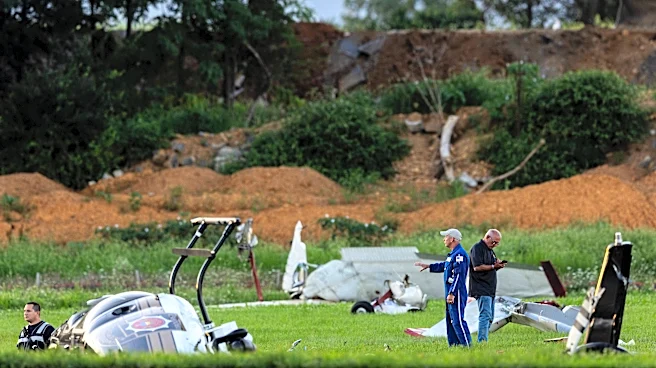
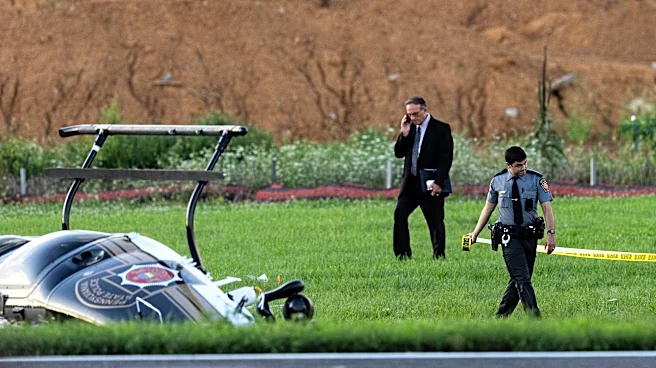
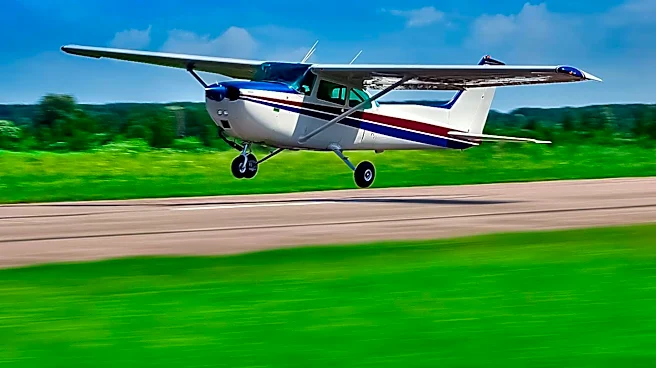
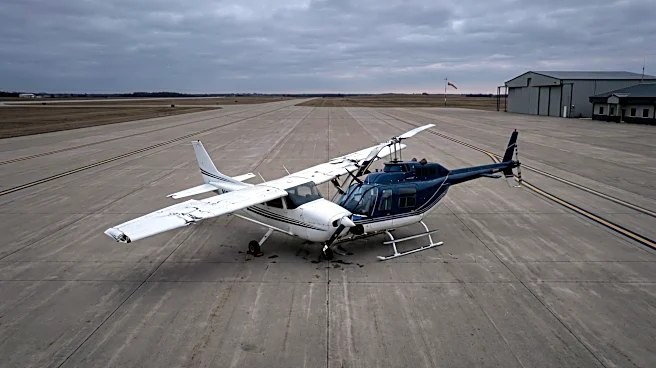
Newly released video footage shows the moment a small Cessna 150 airplane crashed into a Pennsylvania State Police Bell 407 helicopter at Carlisle Regional Airport in Cumberland County. The collision occurred shortly before 7 p.m. on Wednesday while the helicopter was
conducting a training exercise. According to National Transportation Safety Board (NTSB) investigator-in-charge Aaron McCarter, the helicopter was performing a 'hover taxi' several feet off the ground and moving to the side of the runway when the Cessna approached. The plane then suddenly increased its pitch, went nose up, turned, leveled off, and flew into the back of the helicopter. The pilot of the Cessna, identified as 57-year-old Paul Sokoloski, was killed in the crash. A state police colonel and a trooper in the helicopter were initially trapped but managed to escape. Federal investigators have recovered all debris and are analyzing data cards to determine the cause of the 'very violent' crash.
Why It's Important?
This tragic incident highlights the critical importance of air traffic safety protocols, especially at uncontrolled airports where pilots coordinate movements on a shared frequency rather than through a control tower. The collision between a civilian aircraft and a state police helicopter during a training exercise underscores the inherent risks involved in aviation, even during routine operations. The NTSB's investigation will be crucial in identifying the factors that led to this catastrophic event, which could inform future aviation safety regulations and training procedures for both civilian and law enforcement pilots. The loss of life and the damage to state assets also represent a significant impact on public safety resources and the community.
What's Next?
The NTSB's investigation is ongoing, focusing on 'the man, the machine, the environment' to determine the cause of the crash. Investigators will analyze data cards recovered from the scene and examine maintenance records for the Cessna, as the pilot was reportedly conducting maintenance a day prior. Although officials indicate both pilots were in contact, these communications were not recorded, adding complexity to the investigation. The findings of the NTSB will be critical in understanding why the Cessna pilot was flying in that specific pattern and manner. The outcome of this investigation could lead to recommendations for improved safety measures, communication protocols, or training requirements at uncontrolled airports and for law enforcement aviation units nationwide.
Beyond the Headlines
Beyond the immediate investigation, this incident raises broader questions about aviation safety in shared airspace, particularly at smaller, uncontrolled airports. The reliance on pilot self-coordination at such facilities, while common, can present challenges, especially when diverse aircraft types with different operational characteristics are present. The crash also brings into focus the psychological impact on first responders and the aviation community. The NTSB's detailed analysis will not only seek to prevent future accidents but may also contribute to advancements in aviation technology, such as enhanced collision avoidance systems or improved communication tools, to mitigate risks in complex air traffic environments. The incident serves as a stark reminder of the constant vigilance required in aviation to ensure safety.