






What's Happening?
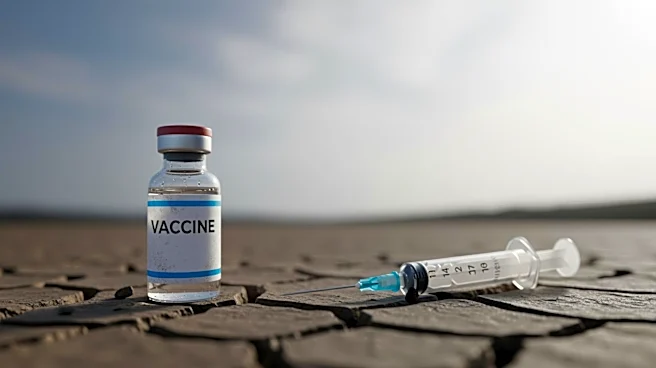
In Pakistan, the ongoing battle against polio is severely hindered by militant attacks on health workers. These workers, who are tasked with administering vaccines to children, face life-threatening risks as extremist groups target them. The militants,
particularly the Tehrik-i-Taliban Pakistan (TTP), propagate false narratives about the polio vaccine, claiming it is a Western ploy to harm Muslim children. This misinformation, coupled with security threats, has led to a rise in polio cases, as vaccination campaigns are delayed or obstructed. The situation is exacerbated by poverty and misinformation, which create an environment conducive to the spread of extremist ideologies.
Why It's Important?
The attacks on polio workers in Pakistan have significant implications for global health and security. The inability to eradicate polio not only endangers children in Pakistan but also poses a risk of international spread, potentially leading to travel restrictions and economic consequences. The situation undermines public trust in health initiatives and the state's ability to protect its citizens. Furthermore, it highlights the broader struggle between public health efforts and extremist ideologies, which use fear and misinformation to destabilize societies. The persistence of polio in Pakistan serves as a reminder of the challenges faced in global health campaigns, particularly in regions affected by conflict and extremism.
What's Next?
To address the issue, Pakistan must enhance security measures for health workers and counter misinformation through public awareness campaigns. International support and collaboration are crucial in strengthening vaccination efforts and rebuilding public trust. The government may need to explore non-military strategies to dismantle extremist narratives and ensure the safety of health workers. Continued efforts to engage local communities and religious leaders in promoting the benefits of vaccination could also play a vital role in overcoming resistance and ensuring the success of polio eradication initiatives.