

What's Happening?
The University of Wyoming (UW) has launched a traveling version of its exhibit, 'The Natural Archive: Glimpses into the University of Wyoming’s Scientific Collections,' which will tour libraries across the state starting in early October. The Wyoming State
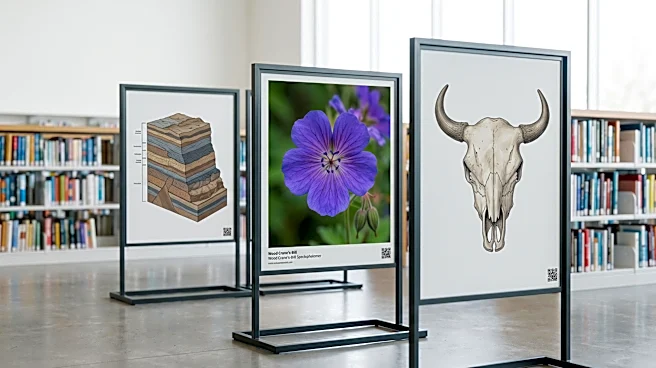
Library is coordinating this initiative, with the Goshen County Library in Torrington being the first stop. The exhibit is scheduled to visit 25 main and branch libraries and will remain on the road through October 2028. This collaborative effort involves UW Libraries and seven natural history collections housed on campus, including the Biodiversity Institute, UW Museum of Vertebrates, UW Geological Museum, UW Insect Museum, Williams Conservatory, Rocky Mountain Herbarium, and Wyoming Natural Diversity Database. The purpose of the exhibit is to highlight and document Wyoming’s rich biodiversity and natural heritage. The traveling exhibit comprises nine panels, each featuring an image with a caption or a QR code that links to digitized items or additional information about the respective collection.
Why It's Important?
This traveling exhibit is important for several reasons, primarily its role in making Wyoming's scientific and natural history accessible to a broader audience across the state. By bringing these collections directly to local libraries, the University of Wyoming and the Wyoming State Library are democratizing access to valuable educational resources that might otherwise only be available to those who can visit the UW campus. This initiative fosters a deeper understanding and appreciation among residents for their state's unique biodiversity and natural heritage, potentially inspiring future generations in scientific fields. Furthermore, the use of QR codes to link to digitized materials enhances the interactive and educational experience, bridging traditional library resources with modern digital access. This project also strengthens the partnership between state educational institutions and local communities, promoting a shared sense of stewardship for Wyoming's natural environment and historical records. The long duration of the tour, spanning two years, ensures that a significant number of communities will have the opportunity to engage with the exhibit, maximizing its educational impact.
What's Next?
The 'Natural Archive' traveling exhibit will continue its tour across Wyoming libraries until October 2028. Each participating library will host the exhibit for approximately four weeks, and patrons are encouraged to check with their local libraries for specific display dates. Following its debut in Torrington, the exhibit is scheduled to visit Weston County Library in Newcastle in November 2026, Crook County Library in Sundance in December 2026, and Campbell County Libraries in Gillette from January to March 2027, among many others. The full exhibit is also permanently displayed at UW, located outside the Library Annex in the basement of the UW Biosciences Building, and is free and open to the public. The success of this tour could lead to similar collaborative initiatives between UW and state libraries, further expanding access to educational and cultural resources throughout Wyoming. The ongoing availability of digitized materials online will also ensure continued access to the collections beyond the physical tour.
Beyond the Headlines
Beyond its immediate educational benefits, the 'Natural Archive' exhibit subtly reinforces the importance of scientific literacy and environmental awareness in Wyoming. By showcasing the state's natural history and biodiversity, it encourages a deeper connection between residents and their environment, which can be crucial for conservation efforts and sustainable development. The exhibit also highlights the role of academic institutions like the University of Wyoming as custodians of knowledge and cultural heritage, extending their reach beyond traditional campus boundaries. In an era where digital information is prevalent, the physical presence of such an exhibit in local libraries can create a unique and tangible learning experience, fostering community engagement and dialogue around scientific topics. The inclusion of historical documents, such as 'The Chugwater Journal,' also connects the state's natural history with its human history, illustrating how past generations interacted with and documented their environment. This blend of scientific and historical perspectives can cultivate a more holistic understanding of Wyoming's identity and its ongoing relationship with its natural world.